Do Hedgehogs Hibernate? When It Starts, What Happens to the Body, and Why the Nest Matters
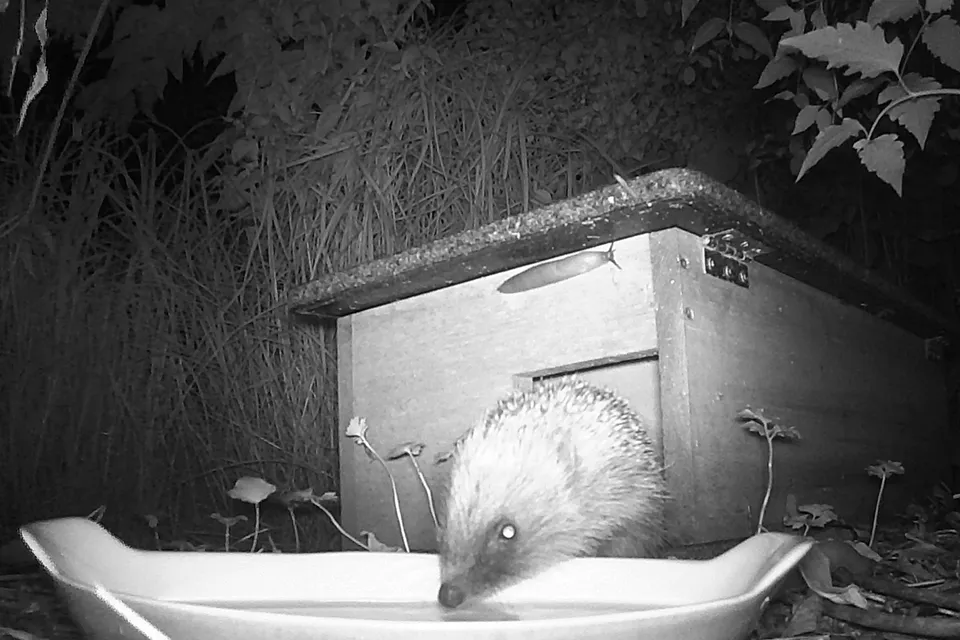
Yes, and properly so. The European hedgehog is one of the few mammals in Britain that truly hibernates, alongside dormice and bats. Somewhere between late October and the New Year, depending on the weather, it builds a nest of leaves, curls up and lets its body run down almost to a standstill. It is not a long sleep, and the difference matters if you find one in your garden this winter.
Hibernation is not sleep
A sleeping animal keeps its body warm and its organs working more or less as usual. A hibernating hedgehog does the opposite. The British Hedgehog Preservation Society (BHPS) sums up the change in its leaflet on hibernation: the heart rate falls "from approximately 190 per minute to a faint 20 per minute", body temperature drops from a normal 35°C to 10°C or less, and breathing almost stops, with about one breath every few minutes.
The conservation campaign Hedgehog Street, run by two British charities, puts it this way: during hibernation hedgehogs "are not really asleep"; they let their body temperature fall to match their surroundings and enter a state called torpor. Biologists distinguish this deep winter torpor from the short daily torpor that some small mammals use. The naturalist Marc Baldwin, on his reference site Wildlife Online, describes hibernation as bouts of more than 22 hours in which the metabolic rate drops by about 95% and the body cools to within a few degrees of the air around it.
The saving is enormous. A warm-blooded animal spends most of its food simply keeping its body at a steady temperature, a job that depends on a fast-beating heart pumping warm blood around. A hedgehog in torpor stops paying that bill for months at a time.
Why hedgehogs do it
The reason is food, not cold as such. Hedgehogs eat beetles, caterpillars, earthworms, earwigs and other invertebrates, and in winter these become scarce. Rather than starve, the hedgehog switches off. The BHPS notes that where food stays available and winters are mild, hedgehogs can manage without hibernating, and that the descendants of European hedgehogs taken to New Zealand only seem to hibernate for short periods, in July and August, which is winter there.
When it starts and when it ends
There is no fixed date. Hedgehog Street gives October or November to March or April as the usual window in Britain, and points out that in mild winters hedgehogs can stay active well into November and December. The BHPS leaflet says hibernation usually begins in November, December or even January, once the temperature around the animal falls and stays low, and ends from about mid-March to early April.
Not every hedgehog goes in at once. Baldwin reports that males usually enter hibernation earlier than females, probably because they have not spent the late summer raising young and so reach a good weight sooner. Late-born youngsters are the last, and the most at risk.
Fattening up first
Autumn is a race to store fat. According to Wildlife Online, a hedgehog may eat a fifth of its body weight in a single night at this time of year, and by the time it hibernates it is likely to weigh at least 600 grams, of which around 30% may be fat. Two kinds are involved. White fat, under the skin and around the gut, is the slow-burning reserve. Brown fat, packed around the shoulders, neck and chest, is the fuel the body burns to warm itself back up.
That is why small autumn hedgehogs worry rescuers. The BHPS explains that youngsters found in autumn weighing less than 450 grams (about a pound) may be kept indoors over winter in rescue centres, because they are vulnerable during and just after hibernation. If you find one, the society's advice line is the place to ask before doing anything.
The nest, or hibernaculum
A hibernation nest is called a hibernaculum. The BHPS describes favourite sites as under hedges and tree roots, in brushwood piles, compost heaps, old rabbit burrows and underneath sheds. The nest looks ramshackle but is well built: a compact dome of dry leaves and grass, 30 to 60 centimetres across, with walls up to 10 centimetres thick.
The aim is not warmth but stability. The BHPS gives 4°C as the optimum temperature for hibernation and warns that a hedgehog hibernating at 10°C uses up its fat about twice as fast. That is why the society discourages well-meaning people from moving healthy hedgehogs into a shed or garage for the winter: there they are neither warm enough to stay active nor cold enough to hibernate efficiently.
Why hedgehogs wake up in winter
Hibernation is not one unbroken stretch. Most hedgehogs wake several times during the winter, usually for a day or two, and often without leaving the nest. Research cited by Hedgehog Street shows that each animal is likely to change nest at least once in the season, so a hedgehog seen on a mild January night is not necessarily in trouble. If it gets too cold and the body is at risk of freezing, the BHPS explains, the body switches on again and rouses the animal. Each waking is costly, though: warming back up to a normal 35°C burns precious fat, and every disturbance spends some of the store meant to last until spring.
Helping without harming
Hedgehog Street's hibernation questions and answers boil down to a few points:
- Leave nests alone. Once a hedgehog is hibernating, do not add or remove nesting material. Check compost heaps, leaf piles and the base of hedges before forking, strimming or lighting a bonfire.
- Feed in mild spells. Put out food when the weather is mild or when you see an active hedgehog. The campaign's feeding page recommends meat-based cat or dog food or dry kitten food, with a shallow dish of water, and says firmly not to give milk, because hedgehogs are lactose intolerant, or bread, which is "fairly worthless to them".
- Know the signs. A hibernating hedgehog is tucked away in its nest, curled into a ball, and if you very gently touch the spines the skin ripples slightly. A hedgehog lying out in the open in daylight in winter is either very ill or dead, and needs expert advice.
Why it matters more than it used to
Hedgehogs have less margin than they once did. In October 2024 the International Union for Conservation of Nature moved the West European hedgehog from Least Concern to Near Threatened on its Red List. As the Mammal Society reported, the change was based on a decline approaching or exceeding 30% in ten years across much of its range. Ireland's broadcaster RTÉ quoted the Oxford researcher Sophie Rasmussen as saying the species "is very close to being 'vulnerable'". In Britain, Hedgehog Street's page on how many hedgehogs are left cites a 2018 estimate of 879,000 animals in England, Scotland and Wales, and notes that over half have been lost from the countryside since 2000.
A hedgehog that makes it through the winter has done something remarkable with a few hundred grams of fat. The least a garden can offer is a quiet corner to do it in. For another animal whose winter depends on stores laid down in summer, see how a honeybee colony works; and for a creature that worries beekeepers far more than gardeners, our page on the giant Asian hornet.
Quick quiz: hedgehog hibernation
Sources
- British Hedgehog Preservation Society. Hibernation (leaflet L2, October 2023), at britishhedgehogs.org.uk, consulted 22 November 2026.
- Hedgehog Street (People's Trust for Endangered Species and British Hedgehog Preservation Society). Hedgehog hibernation, Hibernation FAQs (11 November 2019), Feeding hedgehogs and How many hedgehogs are left?, at hedgehogstreet.org, consulted 22 November 2026.
- Baldwin, M. European Hedgehog Hibernation, Wildlife Online, at wildlifeonline.me.uk, consulted 22 November 2026.
- The Mammal Society. Breaking: European hedgehog listed as Near Threatened on IUCN Red List, 28 October 2024, at mammal.org.uk.
- RTÉ News. Hedgehogs now 'near threatened' as population dwindles, 28 October 2024, at rte.ie.
 Nature
How a honeybee colony works
Queen, workers and drones, the waggle dance, hexagonal comb and how a swarm picks a home.
 Nature
The giant Asian hornet
Vespa mandarinia: size, venom, hive raids, and how North America eradicated it.
 Human Body
How the heart works
Four chambers, four valves, two circuits and the electrical spark behind every beat.