The Central Nervous System: Brain and Spinal Cord Explained
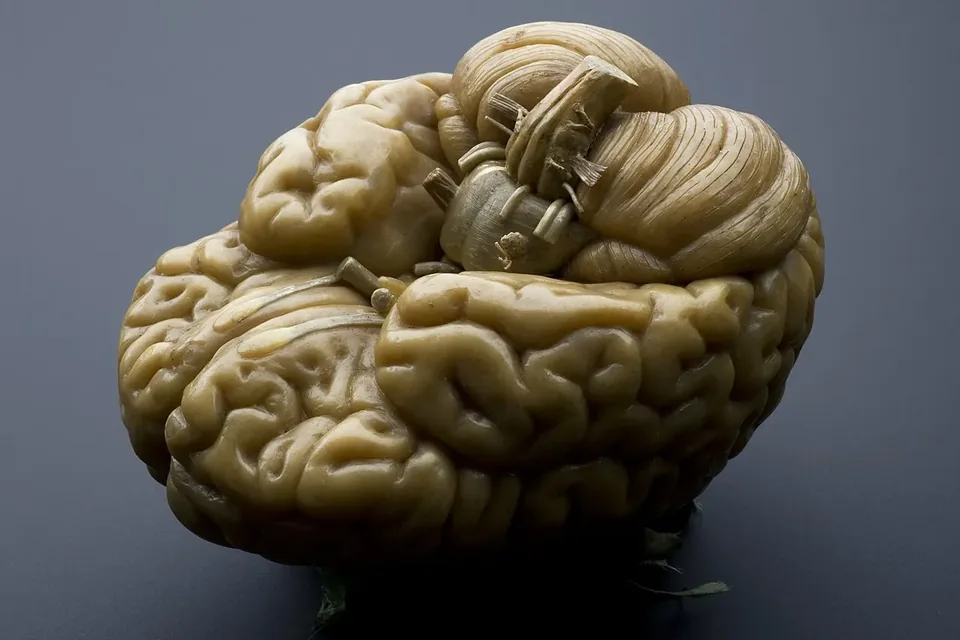
The central nervous system (CNS) is the brain and the spinal cord. It receives information from the body and the outside world, integrates it, and sends out commands. Everything else, the nerves that branch out to the skin, muscles and organs, forms the peripheral nervous system.
Central versus peripheral
The two systems are continuous, but the division is useful. The CNS sits inside bone: the brain in the skull and the spinal cord in the vertebral canal. The peripheral nervous system consists of 12 pairs of cranial nerves, which connect directly to the brain, and 31 pairs of spinal nerves, which connect to the spinal cord, together with their branches and clusters of nerve cells called ganglia. The peripheral system is often subdivided into the somatic part, which controls voluntary movement and carries conscious sensation, and the autonomic part, which regulates heart rate, digestion, breathing rate and other functions without conscious effort.
The brain
The adult human brain weighs about 1.3–1.4 kg, roughly 2% of body weight, yet uses around 20% of the body's energy at rest. Its main parts are:
- Cerebrum: the two cerebral hemispheres, covered by the folded cerebral cortex. The cortex is traditionally divided into frontal, parietal, temporal and occipital lobes, associated respectively (in broad strokes) with planning and movement, body sensation and spatial awareness, hearing and memory, and vision.
- Cerebellum: at the back, below the cerebrum; it coordinates movement, balance and timing. Although it makes up only about a tenth of the brain's volume, it contains most of its neurons.
- Brainstem: the midbrain, pons and medulla oblongata, which connect the brain to the spinal cord and control vital functions such as breathing and heart rhythm.
- Diencephalon: including the thalamus, a relay station for sensory information, and the hypothalamus, which links the nervous system to the hormonal system through the pituitary gland.
How many neurons? A widely cited 2009 study by Frederico Azevedo, Suzana Herculano-Houzel and colleagues counted about 86 billion neurons in the adult male human brain, about 69 billion of them in the cerebellum and about 16 billion in the cerebral cortex. The older round figure of "100 billion" was never based on a direct count. The same study found that non-neuronal cells (glia and others) number roughly the same as neurons, overturning the popular claim that glia outnumber neurons ten to one.
The spinal cord
The spinal cord runs from the base of the brain down the vertebral canal. In adults it is about 45 cm long in men and 43 cm in women, and only about 13 mm across at its widest (in the neck and lower back regions). It ends at around the level of the first or second lumbar vertebra; below that, a bundle of nerve roots called the cauda equina ("horse's tail") continues down the canal. The cord is shorter than the spine because it stops growing in length in early childhood while the vertebral column keeps growing.
The 31 pairs of spinal nerves leave the cord by region: 8 cervical, 12 thoracic, 5 lumbar, 5 sacral and 1 coccygeal. The spinal cord is not just a cable: it contains circuits that produce reflexes, such as pulling a hand away from a hot surface, before the brain is even aware of the pain.
Protection: bone, membranes and fluid
- Bone: the skull and the vertebrae.
- Meninges: three membranes wrap the brain and cord: the tough outer dura mater, the web-like arachnoid mater, and the delicate pia mater that clings to the surface of the brain. Meningitis is inflammation of these membranes.
- Cerebrospinal fluid (CSF): a clear fluid in the brain's ventricles and in the space between arachnoid and pia. An adult has about 125–150 mL at any time, but produces about 500 mL a day, mostly from the choroid plexuses in the ventricles, so the fluid is renewed several times daily. CSF cushions the brain, makes it effectively buoyant and helps remove waste.
- The blood–brain barrier: the cells lining the brain's capillaries are tightly joined, controlling which substances pass from blood into brain tissue. This protects neurons, but also makes many medicines hard to deliver to the brain.
How neurons signal
A neuron receives signals through branching dendrites and sends them along a single long fibre, the axon. Signals travel along the axon as electrical impulses (action potentials) and cross to the next cell at junctions called synapses, mostly by releasing chemical neurotransmitters. Many axons are wrapped in myelin, an insulating fatty sheath made in the CNS by oligodendrocytes; myelin lets impulses jump from gap to gap and travel far faster, up to roughly 100 metres per second or more in the fastest fibres, compared with around 1 m/s in thin unmyelinated fibres. In multiple sclerosis, the immune system damages myelin in the CNS, slowing or blocking signals.
The CNS has a limited capacity to repair itself. Peripheral nerves can regrow slowly after injury, but damaged axons in the brain and spinal cord generally do not regenerate effectively, which is why spinal cord injuries are so often permanent and why research into nerve regeneration is so active.
Quick quiz: the nervous system
Sources
- Azevedo, F. A. C. et al. (2009). "Equal numbers of neuronal and nonneuronal cells make the human brain an isometrically scaled-up primate brain." Journal of Comparative Neurology 513(5): 532–541. doi:10.1002/cne.21974
- National Institute of Neurological Disorders and Stroke, Brain Basics: Know Your Brain.
- OpenStax, Anatomy and Physiology 2e, chapters 12–13 (nervous tissue, anatomy of the nervous system).
- Raichle, M. E. and Gusnard, D. A. (2002). "Appraising the brain's energy budget." PNAS 99(16): 10237–10239. doi:10.1073/pnas.172399499
- Wikipedia, Spinal cord and Cerebrospinal fluid (consulted October 2026).
 Human Body
Bones of the body
Why adults have 206 bones and babies more, and how they split across the skeleton.
 People & Customs
Hand gestures around the world
Thumbs up, OK, the V sign and nodding: same sign, different meaning.
 Nature
The giant Asian hornet
Vespa mandarinia: size, venom, hive raids, and how North America eradicated it.