How Did Halloween Start? Samhain, All Hallows' Eve and the Jack-o'-Lantern
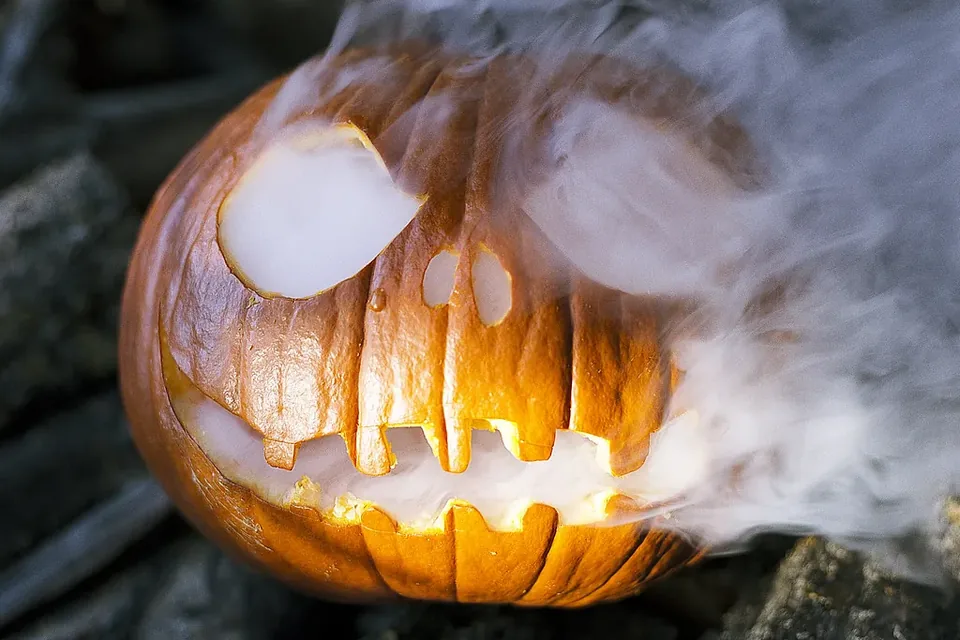
Halloween is the eve of All Hallows' Day, the Christian feast of All Saints on 1 November. Its customs grew from a mix of Christian observance and the folk traditions of Ireland, Scotland and their neighbours, including the Gaelic festival of Samhain, and were carried to North America by Irish and Scottish emigrants in the 19th century.
The name
"Halloween" is a contraction of "All Hallows' Eve(n)": the evening before All Hallows' Day. "Hallow" is an old English word for a holy person, a saint (from Old English hālig, holy). The shortened spelling comes from Scots, where "even" became "e'en", giving "Hallowe'en", the form still common in Britain and Ireland, with the apostrophe marking the missing letter.
All Saints and All Souls
The Church had long honoured martyrs and saints on various days. In 609 Pope Boniface IV dedicated the Pantheon in Rome to the Virgin Mary and all martyrs, with a feast on 13 May. By around 800, churches in Ireland and Northumbria were keeping a feast of all saints on 1 November, and in 835 the Frankish Church adopted 1 November, with the support of Pope Gregory IV. All Souls' Day, on which the faithful pray for the dead, became widespread on 2 November by the 12th century. Together, 31 October to 2 November form a short season of remembrance sometimes called Allhallowtide.
Samhain
Samhain (pronounced roughly SOW-in) was a festival marking the end of the harvest and the beginning of winter in the Gaelic calendar, celebrated around 31 October–1 November in Ireland, Scotland and the Isle of Man. Medieval Irish literature presents it as a time of great gatherings and as a moment when the boundary between this world and the Otherworld could be crossed. In the Irish word for November, Samhain, the name survives today.
The continuity debate
It is often said that "Halloween is the Christianised Celtic new year". Historians are more cautious. The idea that Samhain was a festival of the dead, or a Celtic New Year, relies heavily on 19th- and early 20th-century scholars, and the historian Ronald Hutton argues that the medieval evidence for either is thin; Samhain was, however, clearly a time when supernatural forces were thought to be active. The church fixed All Saints on 1 November for its own reasons, and in Gaelic areas the two festivals overlapped and reinforced one another. Many familiar Halloween customs developed later, around All Saints and All Souls, rather than descending in an unbroken line from pre-Christian rites.
Customs and where they come from
- Souling: in parts of Britain, from at least the 15th century, poor people and children went from house to house on All Souls' or All Saints' Eve receiving "soul cakes" in return for praying for the dead of the household.
- Guising: in Scotland and Ireland, young people went from door to door in disguise, performing a song, verse or trick in return for food or coins. Mumming and guising are recorded from the 16th century onwards.
- Lanterns: in Ireland, Scotland and parts of England, turnips or mangel-wurzels were hollowed out, sometimes carved with faces, and lit from inside. In North America, emigrants found pumpkins larger and easier to carve. The name "jack-o'-lantern" originally meant a will-o'-the-wisp, a flickering light seen over marshes, and is attached to an Irish folk tale about a man named Jack who tricked the devil and was left to wander with a coal in a hollowed turnip.
- Divination games: apple bobbing, nut roasting and other games once used to foretell marriage partners were popular Halloween pastimes in Scotland and Ireland; Robert Burns's poem Halloween (1785) describes many of them.
Crossing the Atlantic
Halloween was a minor holiday in North America until the large waves of Irish and Scottish emigration in the 19th century, especially after the Irish Famine of the 1840s. Over the following decades it became a community and children's festival. Organised parties and parades were promoted in the early 20th century partly to curb pranks and vandalism. The phrase "trick or treat" appears in print in Canada and the United States from the late 1910s and 1920s, and the door-to-door custom spread widely after the Second World War, when sugar rationing ended. American-style Halloween, with costumes, pumpkins and trick-or-treating, has since spread back to Britain and Ireland and on to many other countries.
Related but different: Mexico's Day of the Dead (Día de Muertos), celebrated on 1–2 November, also coincides with All Saints and All Souls, but it has its own roots and customs and is not "Mexican Halloween". UNESCO inscribed the indigenous festivity dedicated to the dead on its list of Intangible Cultural Heritage in 2008.
Quick quiz: Halloween
Sources
- Hutton, R. (1996). The Stations of the Sun: A History of the Ritual Year in Britain. Oxford University Press.
- Rogers, N. (2002). Halloween: From Pagan Ritual to Party Night. Oxford University Press.
- Library of Congress, American Folklife Center, Folklife Today (articles on Halloween history and customs).
- UNESCO Intangible Cultural Heritage, Indigenous festivity dedicated to the dead.
- Wikipedia, Halloween and Samhain (consulted October 2026).
 People & Customs
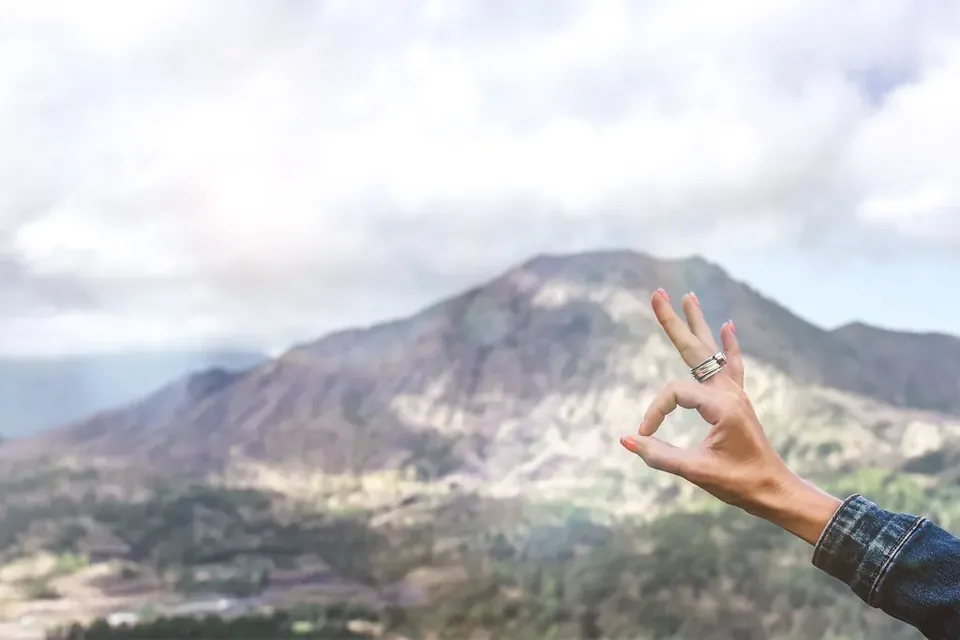
Hand gestures around the world
Thumbs up, OK, the V sign and nodding: same sign, different meaning.
 History
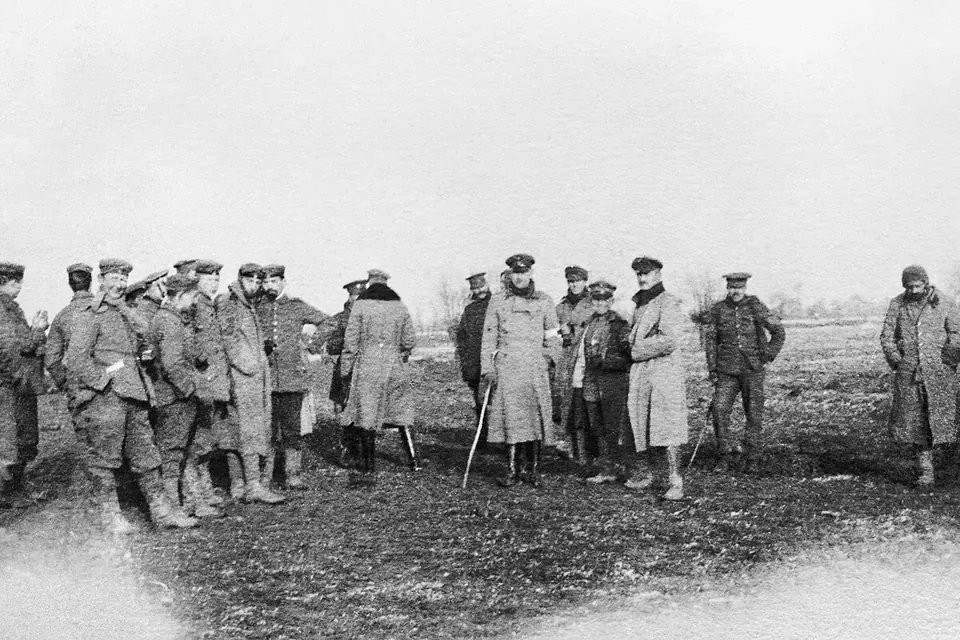
The Christmas truce of 1914
What really happened on the Western Front at Christmas 1914, football matches included.
 History
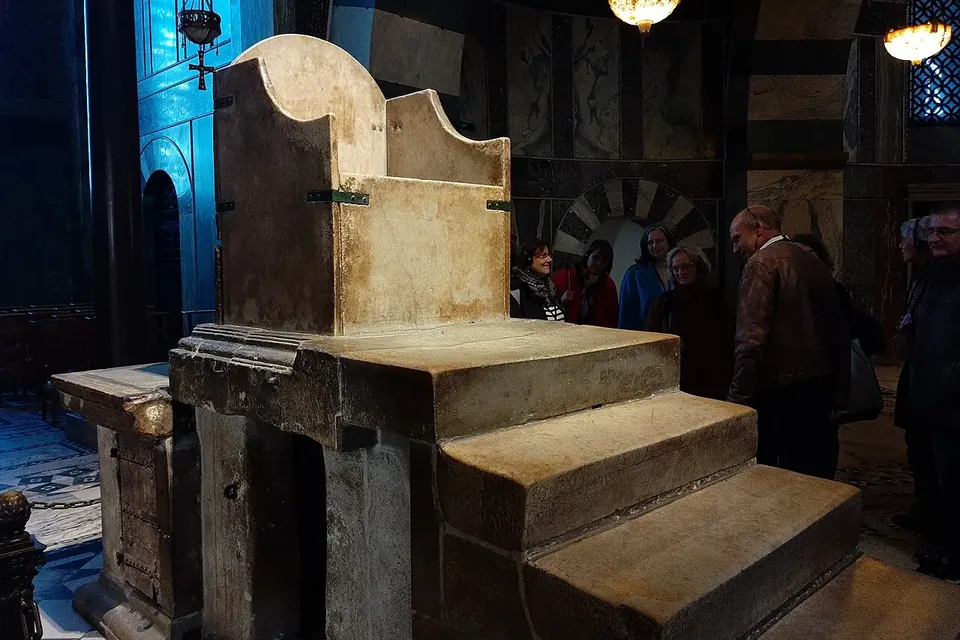
Holy Roman Emperors
From Charlemagne to Francis II: how emperors were elected and crowned, 800 to 1806.