Holy Roman Emperors: From Charlemagne to Francis II
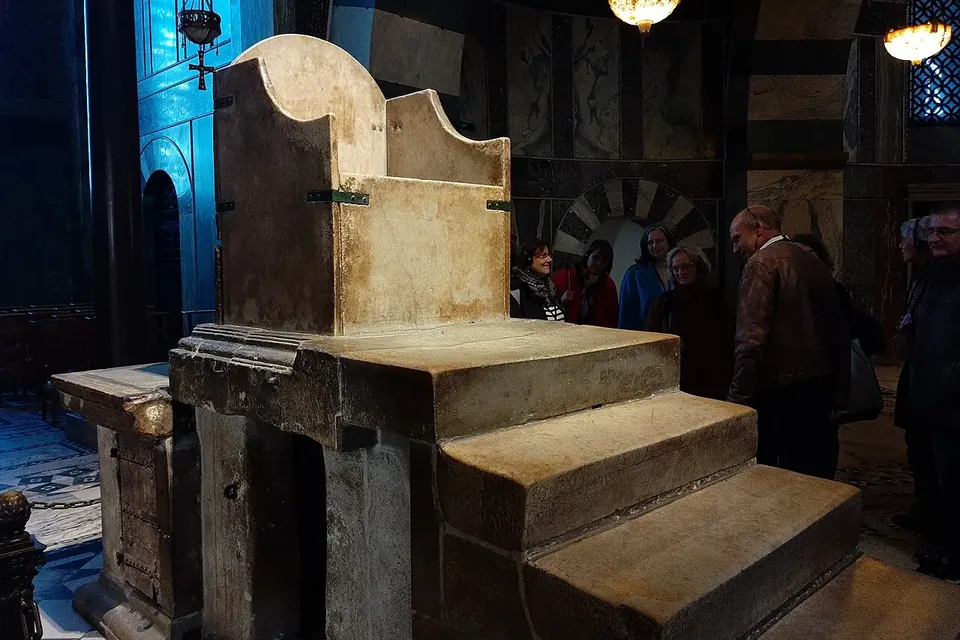
The Holy Roman Emperors ruled, at least in title, over a patchwork of lands in central Europe for about a thousand years. The line is usually counted from Charlemagne's coronation on Christmas Day 800, or from Otto I's in 962, and it ended when Francis II laid down the crown on 6 August 1806.
What the title meant
The emperor claimed to continue the authority of the ancient Roman emperors in the West, with a special role as protector of the Church. In practice his power depended on the princes, bishops and cities of the Empire, most of whom ran their own territories. A ruler normally went through two steps: election as King of the Romans (in German lands, by the leading princes) and coronation as emperor, for centuries performed by the pope in Rome.
The word "holy" (sacrum) was first attached to the empire under Frederick I Barbarossa in 1157, as part of his argument that imperial authority came directly from God rather than through the pope. The fuller form "Holy Roman Empire of the German Nation" appears in the late 15th and early 16th centuries.
How emperors were chosen
Kingship in the Empire was elective, though powerful families often managed to keep it for generations. The Golden Bull of 1356, issued by Charles IV, fixed the rules and named seven prince-electors:
- three churchmen: the Archbishops of Mainz, Trier and Cologne;
- four lay princes: the King of Bohemia, the Count Palatine of the Rhine, the Duke of Saxony and the Margrave of Brandenburg.
The college later changed. During the Thirty Years' War the Palatine vote was transferred to the Duke of Bavaria; the Peace of Westphalia in 1648 created a new eighth electorate so that the Palatinate could have one again. Hanover became a ninth electorate in 1692, confirmed in 1708.
Key emperors at a glance
| Emperor | Imperial dates | Why remembered |
|---|---|---|
| Charlemagne | crowned 800, d. 814 | Crowned "Emperor of the Romans" by Pope Leo III in St Peter's, Rome, on 25 December 800. |
| Otto I, "the Great" | crowned 962, d. 973 | His coronation on 2 February 962 is often taken as the start of the Empire proper. |
| Henry IV | crowned 1084, deposed 1105 | Clash with Pope Gregory VII over who appointed bishops (the Investiture Controversy); the penance at Canossa in 1077. |
| Frederick I Barbarossa | crowned 1155, d. 1190 | Long struggles with the Italian cities and the papacy; drowned in Anatolia on the Third Crusade. |
| Frederick II | crowned 1220, d. 1250 | King of Sicily, patron of learning, repeatedly excommunicated. |
| Charles IV | crowned 1355, d. 1378 | Issued the Golden Bull; made Prague an imperial capital. |
| Frederick III | crowned 1452, d. 1493 | The last emperor crowned by a pope in Rome; secured the title for the Habsburgs. |
| Maximilian I | from 1508, d. 1519 | Took the style "Elected Roman Emperor" without a papal coronation, with the pope's approval; his successors followed suit. |
| Charles V | crowned 1530, abdicated 1556 | Last emperor crowned by a pope, at Bologna in 1530; ruled Spain, the Netherlands and much of Italy as well. |
| Charles VII | 1742–1745 | A Wittelsbach of Bavaria: the only break in Habsburg tenure after 1438. |
| Francis I | 1745–1765 | Husband of Maria Theresa, who as a woman could not hold the imperial title herself but held the Habsburg lands. |
| Francis II | 1792–1806 | Proclaimed himself Emperor of Austria in 1804 and dissolved the Holy Roman Empire on 6 August 1806, under pressure from Napoleon. |
The table is a selection, not a complete list. Some rulers were elected King of the Romans but never crowned emperor; Rudolf I, the first Habsburg king (elected 1273), is the best-known example.
The Habsburg centuries
From the election of Albert II in 1438 the title stayed in the House of Habsburg almost without interruption until the end, the exception being Charles VII between 1742 and 1745. The Habsburgs also ruled Austria, Bohemia and Hungary in their own right, so the imperial crown sat on top of a much larger family power. That combination helps explain why, after the Reformation and the Thirty Years' War, the Empire looked increasingly like a legal framework for hundreds of semi-independent states rather than a single kingdom.
"Neither holy, nor Roman, nor an empire"
The most quoted verdict on the Empire comes from Voltaire, who wrote in his Essai sur les mœurs (1756) that the body which called itself the Holy Roman Empire was in no way holy, nor Roman, nor an empire. It is a good line and a fair description of the 18th-century reality, but historians today tend to stress what the Empire did achieve: courts that settled disputes between rulers, a framework that protected small territories from larger neighbours, and, after 1648, a lasting if uneasy coexistence between Catholic and Protestant states.
Common trivia traps
- "Charlemagne was the first Holy Roman Emperor." Defensible but debated: the word "holy" came centuries later, and many historians date the Empire from Otto I.
- "The pope crowned every emperor." No. After Charles V in 1530, no emperor received a papal coronation.
- "Napoleon abolished the Empire." Napoleon forced the outcome, but it was Francis II who declared it dissolved.
Quick quiz: Holy Roman Emperors
Sources
- Encyclopaedia Britannica, Holy Roman Empire and Golden Bull of 1356.
- Wikipedia, Holy Roman Emperor (list of rulers and coronation dates, consulted October 2026).
- Wilson, P. H. (2016). Heart of Europe: A History of the Holy Roman Empire. Harvard University Press.
- Voltaire (1756). Essai sur les mœurs et l'esprit des nations, chapter 70.
 History
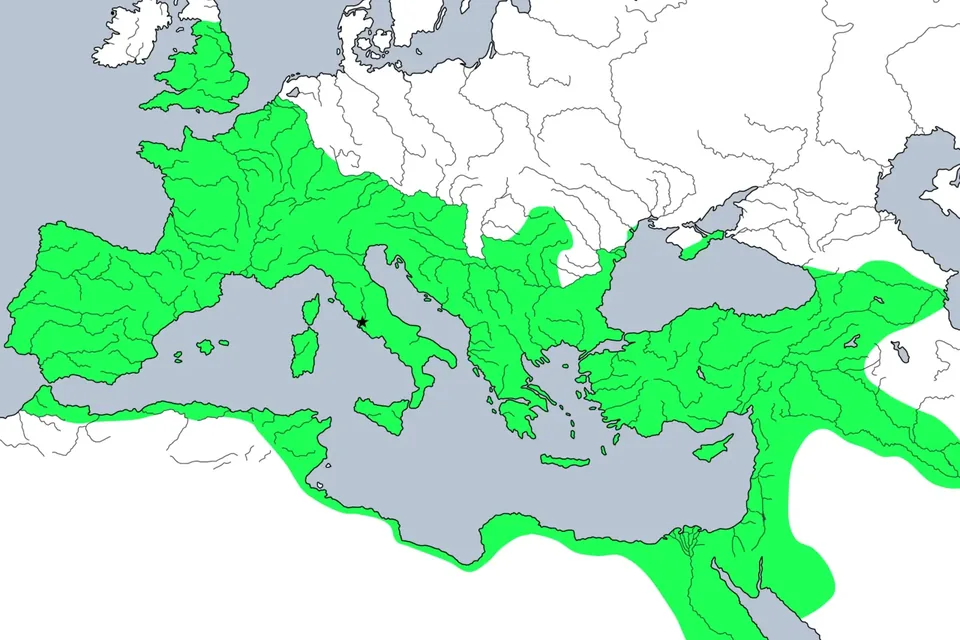
The largest empires in history
British, Mongol, Russian and the rest, by peak land area, and why the ranking is fuzzy.
 History
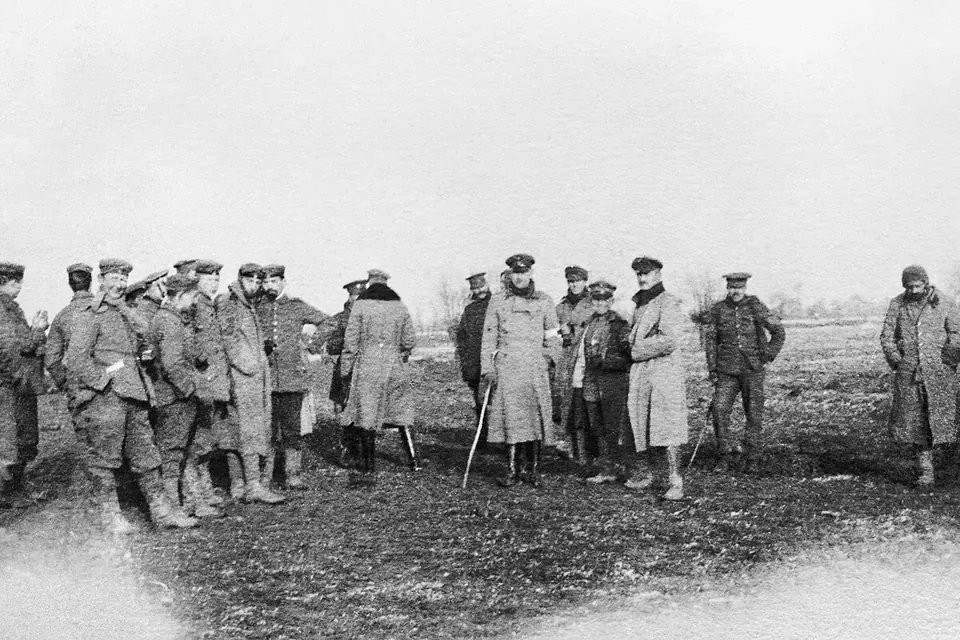
The Christmas truce of 1914
What really happened on the Western Front at Christmas 1914, football matches included.
 Geography
The longest rivers in Africa
The Nile, Congo, Niger, Zambezi and the rest of the top ten, and why lengths vary.