How Digestion Works: From the First Bite to the Large Intestine
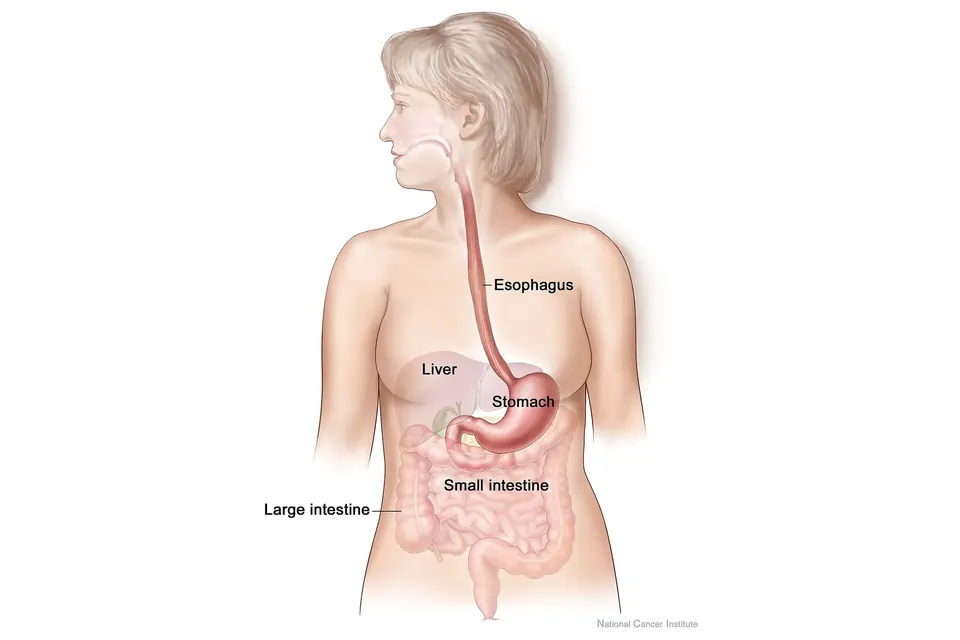
Every meal you eat has to be taken apart before your body can use it. Proteins, fats and starches are far too large to pass into the blood, so the digestive system spends hours grinding, soaking and chemically cutting them into pieces small enough to absorb. Most of that work happens without any conscious decision on your part, in a tube that runs from the mouth to the anus and is helped by three organs that food never actually passes through.
A tube and three helpers
The digestive system has two kinds of parts. The first is the gastrointestinal (GI) tract, a series of hollow organs joined into one long, twisting tube: the mouth, the oesophagus (esophagus in American spelling), the stomach, the small intestine, the large intestine and the anus. The second is a set of solid organs that make or store digestive juices and pour them into the tube: the liver, the gallbladder and the pancreas.
According to the US National Institute of Diabetes and Digestive and Kidney Diseases (NIDDK), the small intestine has three parts, the duodenum, the jejunum and the ileum, and the large intestine is made up of the caecum, the appendix, the colon and the rectum. The tube is lined with muscle, and nerves, hormones and the bacteria living inside it all take part in the work.
The goal is the same for every kind of food. Proteins are broken down into amino acids, fats into fatty acids and glycerol, and carbohydrates into simple sugars. Those small molecules can cross the gut wall; a slice of bread or a piece of cheese cannot.
Mouth and oesophagus: the only part you control
Digestion starts with chewing. Teeth break food into smaller pieces, which gives digestive juices more surface to act on, and the salivary glands add saliva. Saliva moistens food so it slides down easily, and it contains an enzyme that begins breaking down starch before you have even swallowed.
Swallowing is the last step you choose to take. The tongue pushes food to the back of the throat, and a small flap of tissue called the epiglottis folds down over the windpipe so that food goes into the oesophagus rather than towards the lungs. From then on, the process is automatic. Waves of muscle contraction called peristalsis push food along: the muscle behind the mouthful squeezes while the muscle in front of it relaxes. This is why it is possible to swallow while lying down, or even upside down.
At the bottom of the oesophagus, a ring of muscle called the lower oesophageal sphincter relaxes to let food into the stomach, then closes again. When it does not close properly, stomach contents can flow back up, which is what people feel as heartburn.
The stomach: a mixing chamber
The stomach is not where most food is absorbed. Its job is to store a meal, mix it and start the chemical breakdown of protein. Glands in its lining produce acid and enzymes, and its muscular walls churn the food with them until it becomes a thick liquid called chyme. The stomach then releases chyme into the small intestine a little at a time.
For more than a century, peptic ulcers were blamed on stress, spicy food and excess acid. In the early 1980s two Australian doctors, Barry Marshall and Robin Warren, argued that a bacterium, Helicobacter pylori, was responsible for most of them. Colleagues were sceptical, and Marshall famously swallowed a culture of the bacteria himself and developed inflammation of the stomach lining within days. Ulcers are now commonly treated with antibiotics, and the pair received the 2005 Nobel Prize in Physiology or Medicine.
The small intestine: where the real work happens
The small intestine finishes the breakdown of food and absorbs most of its nutrients. It receives three digestive juices. Its own lining makes one. The pancreas sends another, rich in enzymes that cut up carbohydrates, fats and proteins, through small ducts into the duodenum. The third is bile, made by the liver and stored between meals in the gallbladder, which squeezes it into the intestine when you eat. Bile helps the body digest fat and absorb some vitamins.
Once nutrients have been broken down, special cells carry them across the intestinal lining. Sugars, amino acids and some vitamins and salts go into the bloodstream, which takes them first to the liver to be processed and stored. Fatty acids and some vitamins are taken up instead by the lymphatic system. From there, the heart and blood vessels deliver them to every part of the body.
Not a tennis court after all
For decades, textbooks said that the inner surface of the gut, once all its folds and finger-like projections were counted, would cover around 260 to 300 square metres, roughly the size of a tennis court. In 2014 two researchers at the University of Gothenburg, Herbert Helander and Lars Fändriks, decided to check. They reviewed the measurements in the literature and added their own, made under the microscope on biopsies from healthy adults.
Their result was much smaller. The inner surface of the whole digestive tract averaged about 32 square metres, of which only about 2 belonged to the large intestine. In their words, the gut lining is "not in the order of tennis lawn, rather is that of half a badminton court". The same review found that studies in living people put the length of the tract from mouth to anus at roughly 5 metres, about two-thirds of it small intestine, with considerable variation between individuals. The longer figures often quoted are usually explained by measurements made after death, when the muscle of the intestine no longer holds it contracted.
The folding is still impressive. The circular folds of the small intestine enlarge its surface about 1.6 times, and the villi and microvilli together multiply it by somewhere between 60 and 120. Half a badminton court of absorbing surface folded into the abdomen remains a remarkable piece of packing.
The large intestine: water and bacteria
What reaches the large intestine is mostly what the body could not use: fibre and other undigested food, fluid, and old cells shed from the lining of the gut. The large intestine absorbs water from this mixture and turns it from a liquid into stool, which is stored in the rectum until a bowel movement. The bacteria that live there, often called the gut microbiome, break down some of the remaining material and make vitamin K.
Who gives the orders?
Digestion is controlled by hormones and nerves working together. Signals travel within the gut itself and back and forth between the gut and the brain. Simply seeing or smelling food is enough for the brain to start the flow of saliva and stomach juices, a connection that links digestion to the central nervous system.
Much of what we know about this control came from a handful of famous experiments. In 1822, a fur-trade worker named Alexis St. Martin was accidentally shot in the stomach at Fort Mackinac, in what is now Michigan. He survived, but the wound healed with a permanent opening into his stomach. The army surgeon treating him, William Beaumont, used it over several years to watch digestion directly, sometimes lowering pieces of food on a string and pulling them out to see what the gastric juice had done. He published his results in 1833.
At the end of the nineteenth century, the Russian physiologist Ivan Pavlov studied how nerves trigger the secretion of digestive juices in dogs, work that earned him the 1904 Nobel Prize. His experiments on conditioned reflexes, the reason his name is now linked to bells, grew out of that research. And in 1902 the British physiologists William Bayliss and Ernest Starling showed that the duodenum releases a chemical messenger into the blood that tells the pancreas to secrete its juice. They called it secretin. It was the first hormone ever identified, and a few years later Starling coined the word "hormone" itself.
Quick quiz: how digestion works
Sources
- National Institute of Diabetes and Digestive and Kidney Diseases (NIDDK). Your Digestive System & How It Works, at niddk.nih.gov.
- Helander, H. F. and Fändriks, L. (2014). Surface area of the digestive tract: revisited. Scandinavian Journal of Gastroenterology, 49(6), 681–689, abstract at PubMed.
- The Nobel Prize in Physiology or Medicine 1904 (Ivan Pavlov) and 2005 (Barry J. Marshall and J. Robin Warren), official prize pages at nobelprize.org.
- Beaumont, W. (1833). Experiments and Observations on the Gastric Juice, and the Physiology of Digestion. Plattsburgh: F. P. Allen.
- Bayliss, W. M. and Starling, E. H. (1902). The mechanism of pancreatic secretion. The Journal of Physiology, 28(5), 325–353.
 Human Body
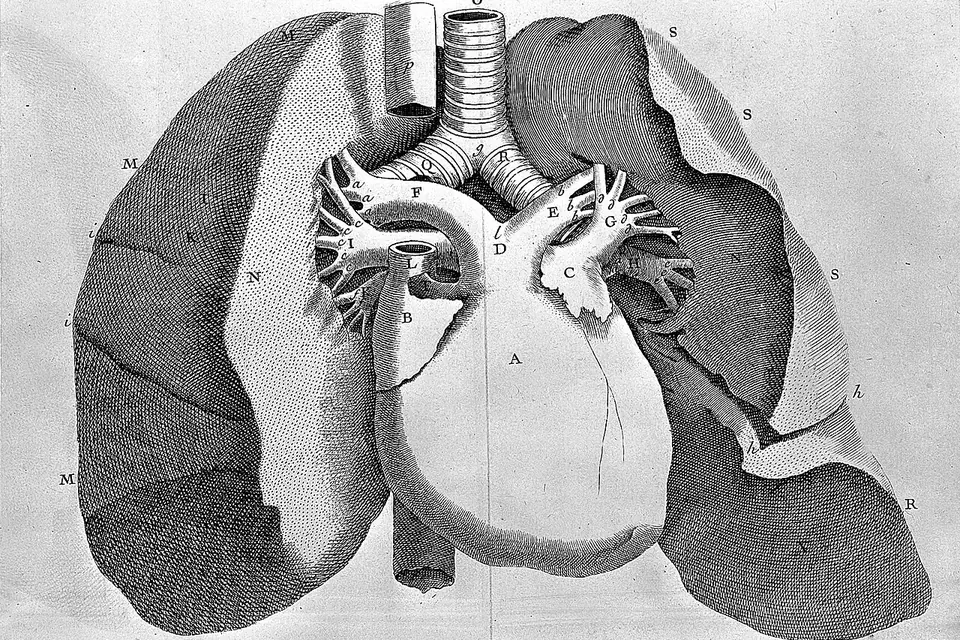
How the lungs work
Two lungs, five lobes, hundreds of millions of air sacs, and the dome of muscle that fills them.
 Human Body
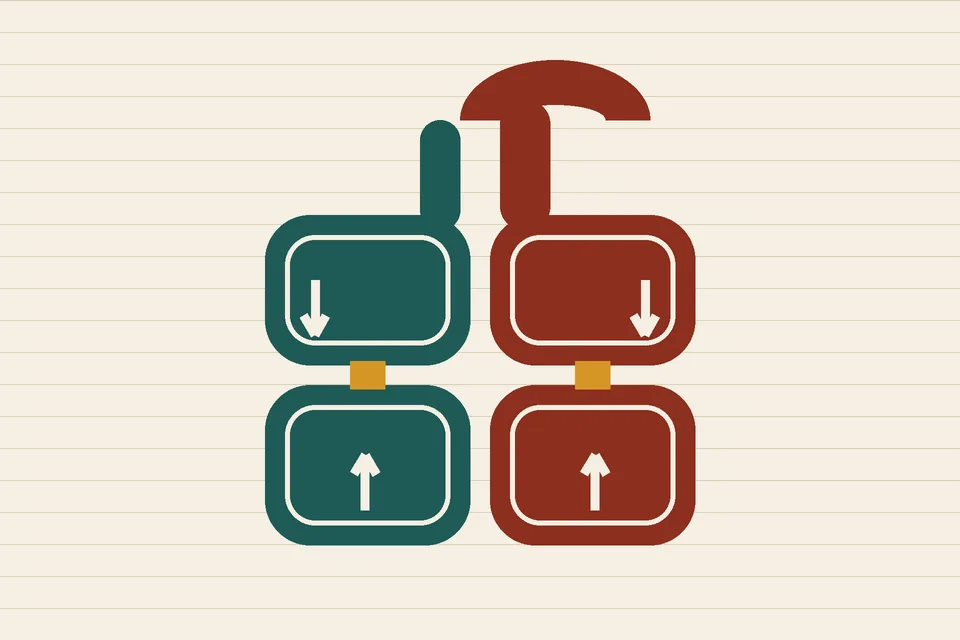
How the heart works
Four chambers, four valves, two circuits and the electrical spark behind every beat.
 Human Body
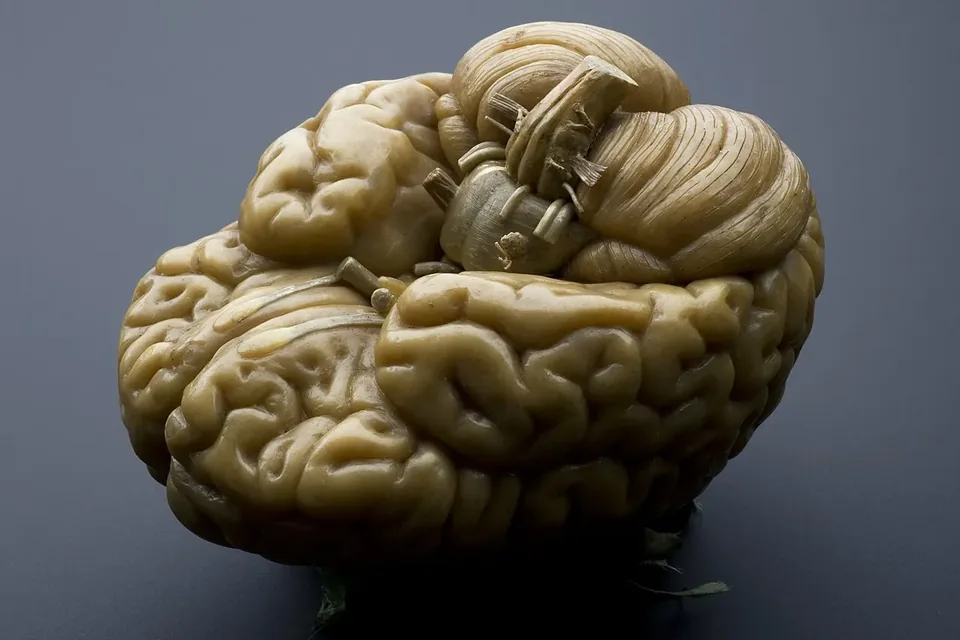
The central nervous system
Brain and spinal cord: how they are built, protected and wired, with the numbers worth knowing.