Why Is Armistice Day on 11 November? The Eleventh Hour, the Silence and the Poppy
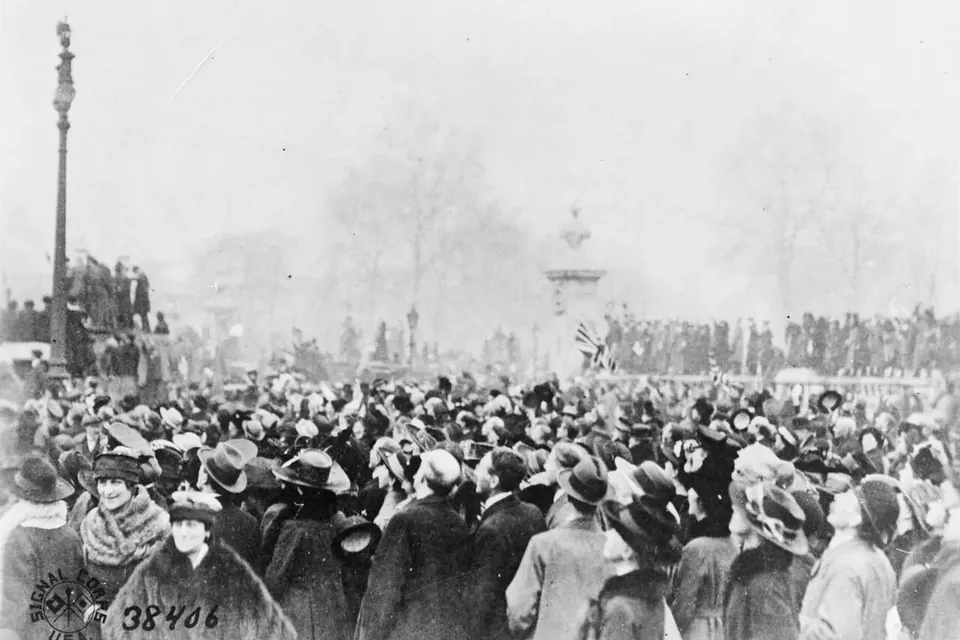
At 11 a.m. on 11 November 1918, the guns on the Western Front fell silent. The "eleventh hour of the eleventh day of the eleventh month" was not the moment the war was signed away, nor the moment it legally ended: it was the hour the fighting stopped. That time became the anchor for Armistice Day, Remembrance Day and Veterans Day, and for the two customs most people associate with them, the silence and the poppy.
What an armistice is, and why it was not the end of the war
An armistice is a suspension of fighting agreed between armies. A peace treaty is something else: it is negotiated by governments and sets the terms of the peace. The French Foreign Ministry's diplomatic archives put the difference plainly, noting that the armistice of 11 November was a military act signed under the authority of Marshal Ferdinand Foch, while French diplomacy only took the stage when the Paris Peace Conference opened on 18 January 1919.
The First World War therefore ended twice. The fighting stopped on 11 November 1918; the war with Germany formally ended with the Treaty of Versailles, signed on 28 June 1919 in the Palace of Versailles. Separate treaties followed with Austria, Bulgaria, Hungary and the former Ottoman Empire.
The railway carriage at Compiègne
Germany had asked for a cessation of hostilities in early November 1918. Its allies had already signed their own armistices, Emperor William II abdicated on 9 November, and revolution was spreading inside Germany. The German delegates met Foch in his private railway carriage, parked in a clearing of the Forest of Compiègne near Rethondes, about 70 kilometres north of Paris. They signed in the early hours of 11 November, at about 5 a.m. French time, and orders went out for hostilities to cease on land, at sea and in the air at 11 a.m.
That gap of roughly six hours is why fighting, and dying, continued through the morning of the last day. Accounts differ by a few minutes on the exact time of signing, but all place it before dawn. The original signed text of the convention is kept today by the French Defence Ministry's historical service, the Service historique de la Défense.
From celebration to remembrance
The first reaction was joy: crowds filled the streets of London, Paris and cities across the Allied countries. Within a year, the anniversary had a different tone. The Australian War Memorial notes that the First World War had mobilised more than 70 million people and left between 9 and 13 million dead, perhaps a third of them with no known grave, and the Allied nations chose the day and hour of the armistice to commemorate them.
In 1920 the commemoration took on a new symbol. On the second anniversary of the armistice, the body of an unidentified soldier brought back from the Western Front was buried with full military honours in Westminster Abbey in London, and another under the Arc de Triomphe in Paris. According to the Australian War Memorial, more than a million people visited the London tomb within a week. Most other Allied nations later created tombs of their own unknown soldiers.
Where the two minutes' silence comes from
The silence is usually traced to a letter published in the London Evening News in May 1919, in which Edward George Honey, a Melbourne-born journalist and war veteran living in London, called for five minutes of silent remembrance. In October 1919 the South African politician Sir Percy Fitzpatrick made a similar proposal; during the war, Cape Town had observed a pause at noon whenever South African troops suffered heavy losses. The idea reached King George V, who agreed to it.
Five minutes proved too long. After a trial with the Grenadier Guards at Buckingham Palace, the silence was cut to two minutes. In November 1919 the King asked that "a complete suspension of all our normal activities" be observed for two minutes at "the eleventh hour of the eleventh day of the eleventh month", and the first two minutes' silence was kept on the first anniversary, including at the new Cenotaph in London. The Australian War Memorial's history of Remembrance Day tells the story in more detail. In Australia, a 1997 proclamation by the Governor-General asks people to observe one minute's silence at 11 a.m.; two minutes remains the custom in Britain.
Why the poppy?
Red poppies were among the first plants to grow back in the churned-up ground of northern France and Belgium. In 1915, the sight of poppies near Ypres moved the Canadian medical officer Lieutenant Colonel John McCrae to write the poem "In Flanders Fields", which begins with poppies blowing "between the crosses, row on row".
Two women turned the flower into a symbol. Moina Michael, who worked for the American YMCA, read McCrae's poem shortly before the armistice, wrote a poem in reply and resolved to wear a red poppy. At a YMCA meeting in November 1918 she described the idea, and Anna Guérin, a French YMCA secretary, took it further by selling poppies to raise money for widows, orphans and veterans. Within a few years the poppy was worn across the Allied nations on Armistice Day. In Australia, the forerunner of the Returned and Services League first sold poppies for Armistice Day in 1921, importing a million silk poppies made in French orphanages; the Australian War Memorial's page on Flanders poppies gives the full story.
Armistice Day, Remembrance Day, Veterans Day
The day changed names as later wars added to the dead. In Australia and Britain, the name Remembrance Day replaced Armistice Day after the Second World War, because the day now honoured the dead of all wars. The United States took a different route, set out in the US Department of Veterans Affairs' history of Veterans Day:
- November 1919: President Woodrow Wilson proclaims the first commemoration of Armistice Day.
- 13 May 1938: an Act of Congress makes 11 November a legal holiday, "Armistice Day".
- 1 June 1954: Congress replaces the word "Armistice" with "Veterans", and the day honours American veterans of all wars.
- 1971: under the Uniform Holiday Bill of 1968, Veterans Day moves to a Monday and is observed on 25 October, "with much confusion".
- 1978: a law signed by President Gerald Ford in 1975 returns Veterans Day to 11 November, whatever day of the week it falls on.
The two traditions now differ in tone. Remembrance Day in the Commonwealth centres on the dead; Veterans Day in the United States honours everyone who has served, living or dead, while Memorial Day in May remembers those who died.
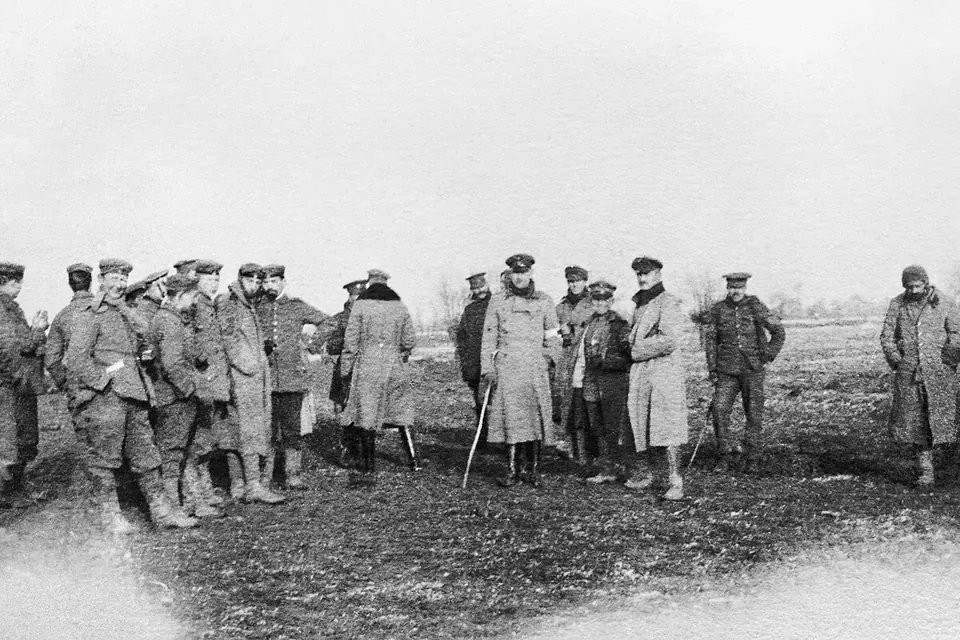
A truce of a very different kind had happened four years earlier, when soldiers on parts of the Western Front stopped fighting on their own initiative: see the Christmas truce of 1914. For another way of remembering the dead in early November, see the Day of the Dead.
For quizzes, keep the three dates apart: the armistice was signed at about 5 a.m. on 11 November 1918, the fighting stopped at 11 a.m. the same day, and the war with Germany officially ended with the Treaty of Versailles on 28 June 1919.
Quick quiz: Armistice Day
Sources
- France, Ministry for Europe and Foreign Affairs, Diplomatic Archives, "The Armistice of 11 November 1918 and the Quai d'Orsay" (consulted November 2026).
- The National Archives (UK), "Milestones to peace: the Armistice of Compiègne", blog article.
- Australian War Memorial, Origins of Remembrance Day; The two minutes' silence; Flanders poppies (consulted November 2026).
- US Department of Veterans Affairs, History of Veterans Day (page updated 10 June 2024).
- McCrae, J. (1915). "In Flanders Fields", first published in Punch, December 1915.
 History
The Christmas truce of 1914
What really happened on the Western Front at Christmas 1914, football matches included.
 People & Customs
Day of the Dead
Ofrendas, marigolds, sugar skulls and La Catrina: what Día de Muertos is, and is not.
 History
The largest empires in history
British, Mongol, Russian and the rest, by peak land area, and why the ranking is fuzzy.