The Longest Rivers in Africa: Top 10 and Why Lengths Vary
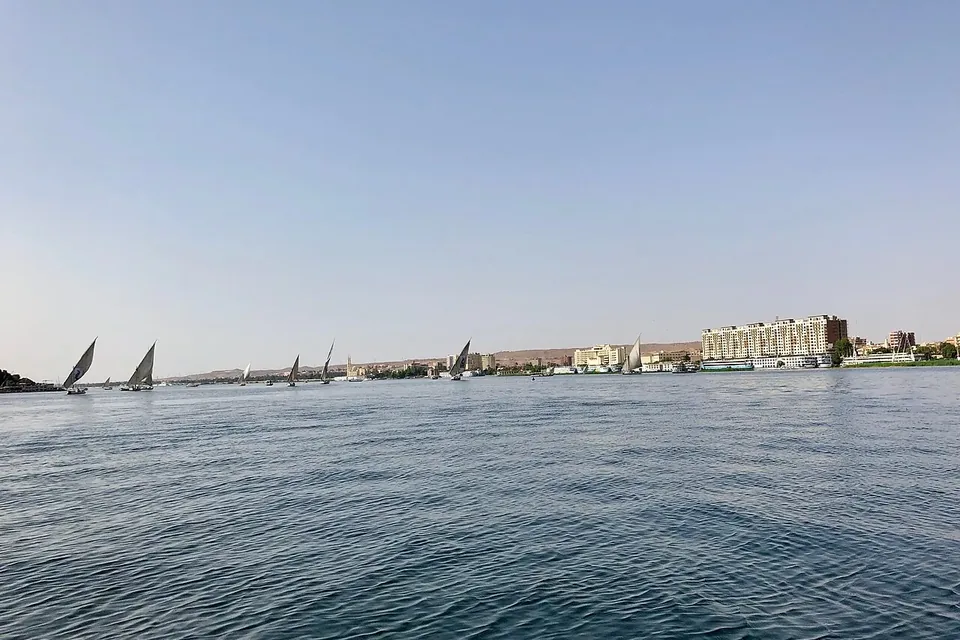
The Nile is Africa's longest river at about 6,650 km, followed by the Congo (about 4,700 km) and the Niger (about 4,200 km). After those three the figures drop sharply, and the order of the next rivers depends on which source, and which measuring choices, you use.
Africa's ten longest river systems
Lengths below are those most widely cited in reference works and in the compilation of river systems by length on Wikipedia, which averages sources where they disagree (marked *). "River system" means the longest continuous channel, which may include headwater streams with other names.
| # | River system | Length (km) | Length (mi) | Flows into | Main countries |
|---|---|---|---|---|---|
| 1 | Nile (with Kagera headwaters) | 6,650 | 4,130 | Mediterranean Sea | Uganda, South Sudan, Sudan, Egypt; basin shared by 11 countries |
| 2 | Congo–Lualaba | 4,700 | 2,920 | Atlantic Ocean | DR Congo, Republic of the Congo, Angola, Zambia and others |
| 3 | Niger | 4,200 | 2,610 | Gulf of Guinea | Guinea, Mali, Niger, Benin, Nigeria |
| 4 | Zambezi | 2,740* | 1,700* | Mozambique Channel (Indian Ocean) | Zambia, Angola, Namibia, Botswana, Zimbabwe, Mozambique |
| 5 | Orange | 2,432 | 1,511 | Atlantic Ocean | Lesotho, South Africa, Namibia |
| 6 | Ubangi–Uele | 2,270 | 1,410 | Congo River | Central African Republic, DR Congo, Republic of the Congo |
| 7 | Kasai | 2,153 | 1,338 | Congo River | Angola, DR Congo |
| 8 | Jubba–Shebelle | 2,064 | 1,282 | Indian Ocean | Ethiopia, Somalia |
| 9 | Limpopo | 1,800 | 1,118 | Indian Ocean | South Africa, Botswana, Zimbabwe, Mozambique |
| 10 | Senegal | 1,641 | 1,020 | Atlantic Ocean | Guinea, Mali, Mauritania, Senegal |
Just outside the top ten come the Volta, the Okavango and the Blue Nile (each around 1,600 km). Two of the entries above, the Ubangi and the Kasai, are tributaries of the Congo rather than rivers that reach the sea, which is why some lists that count only rivers with their own mouth leave them out.
Notes on the leaders
Nile
The Nile is formed by two great branches that meet at Khartoum in Sudan. The White Nile supplies the length: its remotest headstreams rise in the highlands of Burundi and Rwanda and feed the Kagera River, which flows into Lake Victoria. The Blue Nile, which leaves Lake Tana in Ethiopia, supplies most of the water during the summer flood. From Khartoum the united river runs north through Sudan and Egypt to its delta on the Mediterranean.
The Nile is traditionally ranked as the world's longest river, but the Amazon is a close rival. Some measurements put the Amazon ahead, depending mainly on where its mouth is placed in the estuary it shares with the Pará and Tocantins.
Congo
Second in length, the Congo is first by far in volume: its average discharge at the mouth, around 41,000 cubic metres per second, is the largest in Africa and second in the world after the Amazon. It is also the deepest river on record: a 2008 survey by the U.S. Geological Survey and the American Museum of Natural History measured depths of at least 220 m in its lower course. The upper river is called the Lualaba, and the Congo crosses the Equator twice.
Niger
The Niger rises in the Guinea Highlands only a few hundred kilometres from the Atlantic, yet flows away from the sea, north-east into the Sahel, before turning south-east through Niger and Nigeria to the Gulf of Guinea. In Mali it spreads into the Inner Niger Delta, a vast seasonal floodplain. This boomerang course long puzzled European geographers, who for centuries debated where the river ended.
Zambezi
The Zambezi is famous for Victoria Falls on the border of Zambia and Zimbabwe, and for two of Africa's largest reservoirs, Kariba and Cahora Bassa. Its length is one of the least settled in the table: published figures range from roughly 2,570 km to well over 2,700 km, which is why the value above is an average.
Why river lengths disagree
There is no single agreed standard for measuring a river, and the choices change the answer by tens or hundreds of kilometres:
- Where is the source? The rule is usually "the most distant point that feeds the system", but finding it means following the longest headstream, which can have a different name (the Kagera for the Nile, the Lualaba or even the Chambeshi for the Congo).
- Where is the mouth? Deltas and estuaries make the end point a matter of judgement.
- Through lakes and reservoirs. A line through a lake can follow its centre or its shore; dams such as Kariba have changed the channel.
- Map scale and meanders. The finer the map, the more bends you measure, and the longer the river gets.
- Rivers move. Meanders cut off and channels shift, so a measurement is always a snapshot.
For quizzes, the safest facts are the order of the first three (Nile, Congo, Niger), which no serious source disputes, and the comparison "Congo: second longest, but largest by volume".
Quick quiz: African rivers
Sources
- Wikipedia, List of river systems by length (lengths and averaging notes, consulted October 2026).
- Encyclopaedia Britannica, Nile River, Congo River, Niger River, Zambezi River.
- Guinness World Records, Deepest river (2008 survey of the lower Congo by the U.S. Geological Survey and the American Museum of Natural History).
- Nile Basin Initiative, nilebasin.org (member states and basin facts).
 Geography
The largest lakes in the world
Caspian, Superior, Victoria and Baikal, ranked by area, depth and volume.
 History
The largest empires in history
British, Mongol, Russian and the rest, by peak land area, and why the ranking is fuzzy.
 Nature
The giant Asian hornet
Vespa mandarinia: size, venom, hive raids, and how North America eradicated it.