The Largest Lakes in the World, by Area, Depth and Volume
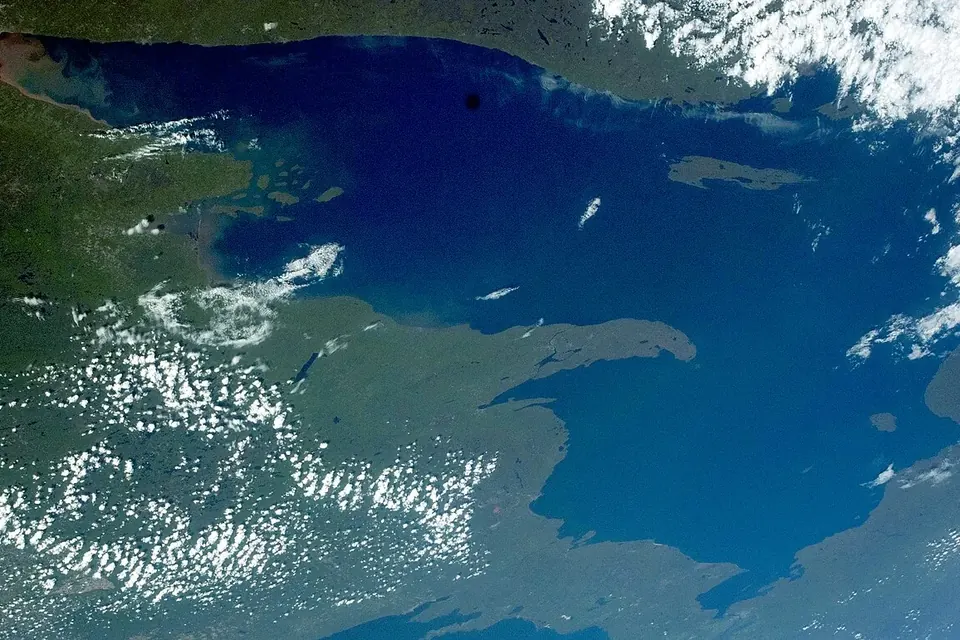
By surface area, the largest lake in the world is the Caspian Sea, a salty inland body of water of roughly 370,000–390,000 km². The largest freshwater lake by area is Lake Superior (about 82,100 km²), while the largest by volume, and the deepest, is Lake Baikal in Siberia.
"Largest" has three meanings
A lake can be ranked by surface area, by depth or by the volume of water it holds, and the three lists look very different. Shallow lakes can cover enormous areas; narrow rift lakes can be extraordinarily deep. On top of that, two definitional questions change the top of the table:
- Is the Caspian a lake? It is landlocked, which by the everyday definition makes it a lake, but its basin is floored with oceanic-type crust and it is saline. Geographers usually list it as a lake while noting it is a special case. The legal status of the Caspian among its five shore states was the subject of a 2018 convention that gave it a status of its own, neither sea nor lake.
- Are Michigan and Huron one lake? They are joined by the Straits of Mackinac, which are wide and deep enough that the two stand at the same water level. Hydrologically they behave as one lake of about 117,600 km², which would be the largest freshwater lake in the world. By convention they are listed separately.
The 12 largest lakes by surface area
| # | Lake | Area (km²) | Max depth (m) | Countries |
|---|---|---|---|---|
| 1 | Caspian Sea (saline) | c. 371,000–389,000 | 1,025 | Russia, Kazakhstan, Turkmenistan, Iran, Azerbaijan |
| 2 | Superior | 82,100 | 406 | Canada, United States |
| 3 | Victoria | c. 59,900–68,800 | 81 | Uganda, Kenya, Tanzania |
| 4 | Huron | 59,600 | 229 | Canada, United States |
| 5 | Michigan | 57,800 | 282 | United States |
| 6 | Tanganyika | 32,900 | 1,470 | Tanzania, DR Congo, Burundi, Zambia |
| 7 | Baikal | 31,700 | 1,642 | Russia |
| 8 | Great Bear | 31,200 | 446 | Canada |
| 9 | Malawi (Nyasa) | 29,600 | 706 | Malawi, Mozambique, Tanzania |
| 10 | Great Slave | 27,200 | 614 | Canada |
| 11 | Erie | 25,700 | 64 | Canada, United States |
| 12 | Winnipeg | 24,500 | 36 | Canada |
Ranges are given where reference works differ noticeably. The Caspian's surface has been falling over recent decades as its water level drops, and the figure for Lake Victoria varies with the source and the year of measurement. Lake Michigan is the largest lake lying entirely within one country; Great Bear is the largest entirely within Canada.
Depth and volume: Baikal and Tanganyika
Lake Baikal, in southern Siberia, reaches 1,642 m at its deepest point, making it the deepest lake on Earth. It holds about 23,600 km³ of water, more than all five North American Great Lakes combined, and UNESCO, which listed it as a World Heritage Site in 1996, describes it as containing about 20% of the world's unfrozen surface fresh water. It is also considered the oldest existing lake, at around 25 million years, and is home to many species found nowhere else, including the Baikal seal, one of very few freshwater seals.
Lake Tanganyika, in the East African Rift, is second in both depth (1,470 m) and freshwater volume (about 18,750 km³). It is also the longest freshwater lake in the world, stretching some 670 km from north to south. Its neighbour Lake Malawi is famous for its cichlid fishes: it is thought to hold more fish species than any other lake.
The contrast with Lake Erie is striking: almost as large in area as Lake Malawi, but with a maximum depth of only 64 m, it holds the least water of the Great Lakes, which is one reason it warms quickly in summer and is prone to algal blooms.
Lakes that change size
Some lakes are hard to rank because they do not keep still. Lake Chad, on the edge of the Sahara, has shrunk dramatically since the 1960s and varies greatly from season to season. The Aral Sea, once among the four largest lakes in the world, lost most of its area after the rivers feeding it were diverted for irrigation in the Soviet era, splitting into separate remnant basins. A list of "largest lakes" is therefore always a list for a particular period, and older quiz books can be badly out of date on these entries.
Safe quiz answers: largest lake by area, the Caspian Sea; largest freshwater lake by area, Lake Superior; deepest and largest by volume, Lake Baikal; largest lake in Africa, Lake Victoria.
Quick quiz: lakes
Sources
- UNESCO World Heritage Centre, Lake Baikal.
- U.S. Environmental Protection Agency, Physical Features of the Great Lakes.
- NOAA Great Lakes Environmental Research Laboratory, glerl.noaa.gov (Michigan–Huron hydrology).
- Wikipedia, List of lakes by area (consulted October 2026).
- Encyclopaedia Britannica, Caspian Sea and Lake Tanganyika.
 Geography
The longest rivers in Africa
The Nile, Congo, Niger, Zambezi and the rest of the top ten, and why lengths vary.
 History
The largest empires in history
British, Mongol, Russian and the rest, by peak land area, and why the ranking is fuzzy.
 Nature
The giant Asian hornet
Vespa mandarinia: size, venom, hive raids, and how North America eradicated it.