Trivia Questions with Answers and Sources: How We Write Every Question
A trivia question looks like the simplest thing in the world: a question, an answer, a point. Anyone who has run a quiz night knows it is not. Half the arguments at the end of a round come from questions with two defensible answers, figures that changed since the question was written, or "facts" that were never true. This page collects twenty trivia questions and answers from across Footnoted, each linked to the page where the answer is explained and sourced, and sets out the rules we follow before any question goes into one of our quizzes.
What makes a good trivia question
A good question has exactly one answer that a well-read person could defend, and that answer can be checked by someone else in a few minutes. That rules out a surprising number of popular questions. "What is the largest lake in the world?" is a fine question if you accept the Caspian Sea as a lake, and an argument if you do not. "How tall is Everest?" has an answer that depends on the year: the height announced jointly by Nepal and China in December 2020 is not the one printed in older atlases.
A good question is also fair. It tests knowledge rather than reading speed or a trick in the wording, and its wrong options are plausible without being equally right. When we write multiple-choice options, each wrong answer is something people genuinely confuse with the right one: the incus and the stapes, the Congo and the Niger, the Caspian Sea and Lake Superior.
How we write and source every question
Every quiz on Footnoted sits at the foot of a fact page, and every question follows the same five rules.
- The answer is in the article above the quiz. No question asks for something the page does not explain, so a player who gets it wrong can scroll up and see why.
- The answer has a named source. We go to the organisation that measures or records the thing: a survey office for a mountain, a natural history society for an animal, a national archive or a primary text for a date. Encyclopaedias help us find those sources; they are not where we stop.
- Figures carry a date. A price, a population or a height is written with the year it applies to. If a newer figure appears, the question is updated rather than left to drift.
- Disputes are stated, not hidden. Where serious sources disagree, either the question is rewritten so it has one answer ("on Richard Bass's list, which peak represents Australia?") or it is dropped.
- Every answer comes with a reason. Our quizzes show a one-line explanation after each answer, because learning why an answer is right is the useful part of getting it wrong.
If you spot a mistake, the contact page explains how to tell us; corrected questions are fixed on the page itself.
Twenty trivia questions and answers, with their sources
Use these as a ready-made round, or as a starting point for your own. Each answer links to the Footnoted page that explains it and lists its sources at the foot.
History
- Where was the armistice of 11 November 1918 signed? In a railway carriage in the Forest of Compiègne. (Armistice Day)
- In which year did soldiers on the Western Front hold the famous Christmas truce? 1914. (The Christmas truce)
- Which emperor did Odoacer depose in 476, the date usually given for the end of the Western Roman Empire? Romulus Augustulus. (Why the Roman Empire fell)
- Which pope crowned Charlemagne emperor on Christmas Day in the year 800? Leo III. (Holy Roman Emperors)
- What false name did Guy Fawkes give when he was arrested beneath the House of Lords? John Johnson. (The Gunpowder Plot)
Geography
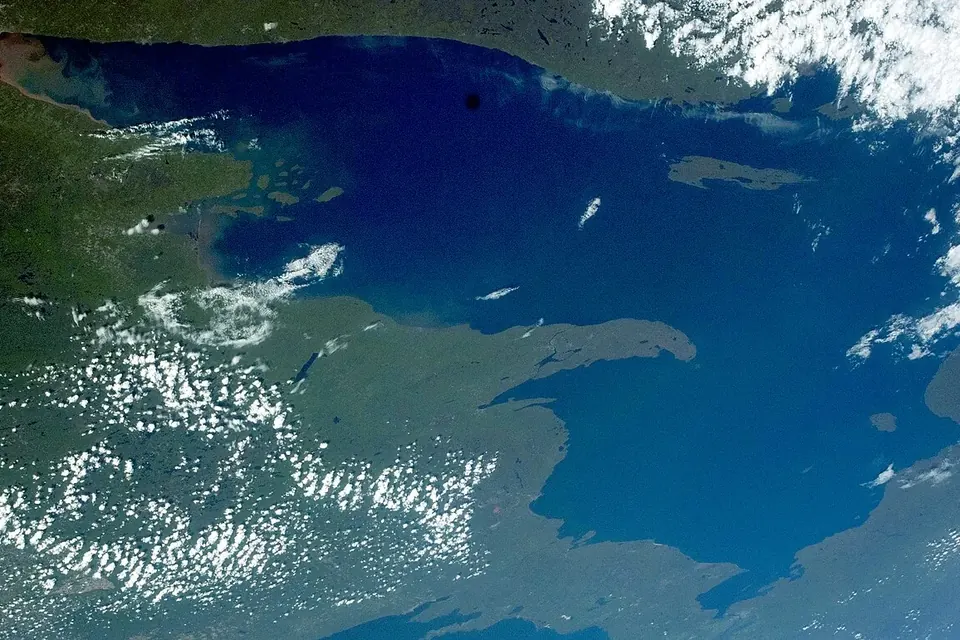
- Which is the deepest lake in the world? Lake Baikal, in Siberia. (The largest lakes in the world)
- Which African river carries the most water to the sea? The Congo. (The longest rivers in Africa)
- In which city do the White Nile and the Blue Nile meet? Khartoum. (same page)
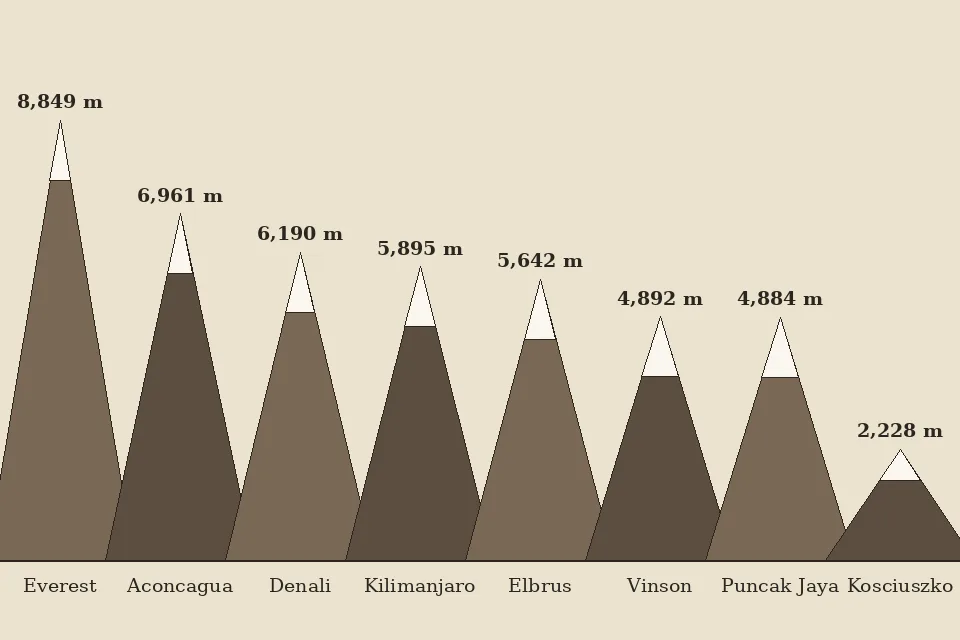
- What is the highest mountain in South America? Aconcagua. (The Seven Summits)
- Which empire is usually ranked the largest in history by land area at its peak? The British Empire. (The largest empires in history)
Nature
- What is a hedgehog's winter nest called? A hibernaculum. (Do hedgehogs hibernate?)
- What does an unfertilised honeybee egg develop into? A drone, a male bee. (How a honeybee colony works)
- A mutation in which gene makes the Xolo, the Peruvian Hairless Dog and the Chinese Crested hairless? FOXI3. (Hairless dog breeds)
- What is the scientific name of the northern giant hornet, once nicknamed the "murder hornet"? Vespa mandarinia. (The giant Asian hornet)
The human body
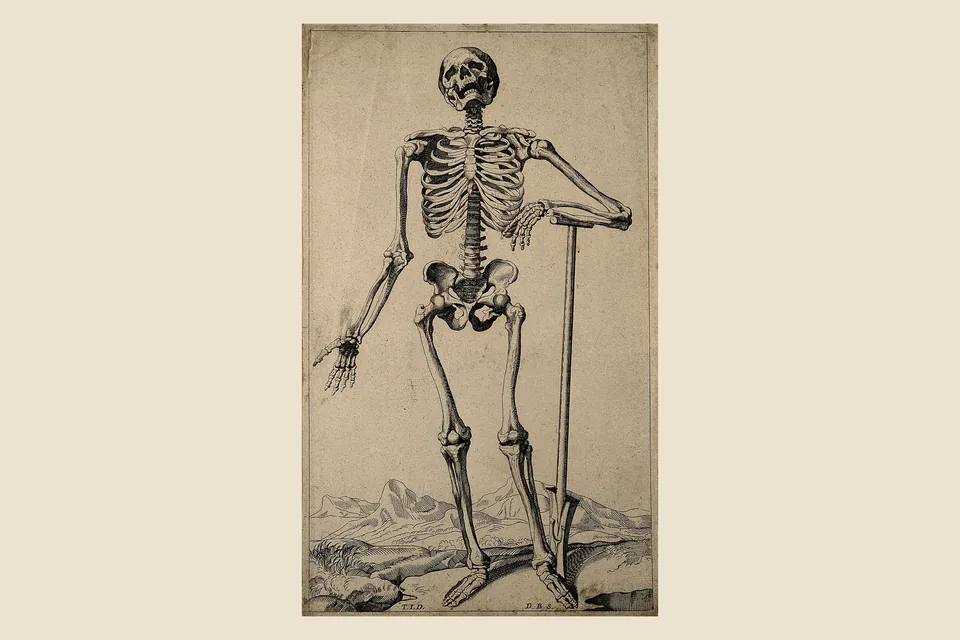
- What is the smallest bone in the human body? The stapes, or stirrup, in the middle ear. (Bones of the body)
- Which bone does not form a joint with any other bone? The hyoid, in the neck. (same page)
- Which part of the brain contains the most neurons? The cerebellum. (The central nervous system)
- How many lobes does the left lung have? Two; the right lung has three. (How the lungs work)
People and customs
- Which Mexican printmaker made the original etching of the skeleton later known as La Catrina? José Guadalupe Posada. (The Day of the Dead)
- Which president made Thanksgiving a national annual holiday in 1863? Abraham Lincoln. (Why Thanksgiving is on the fourth Thursday)
More rounds, sorted by subject, are on our quizzes page.
Questions with more than one right answer
Some of the best-known trivia questions are the ones most likely to start an argument. A few that we either rewrite or avoid:
- "What is the highest mountain in Australia's continent?" On the Seven Summits list drawn up by Richard Bass it is Kosciuszko; on Reinhold Messner's list it is Puncak Jaya in New Guinea. Our Seven Summits page names the list in the question.
- "What is the largest freshwater lake?" Lake Superior wins if Michigan and Huron are counted separately; hydrologically, those two are one body of water, which would put Michigan–Huron first by surface area. We ask about Superior "counting Michigan and Huron separately".
- "How many bones are in the human body?" The usual answer, 206, applies to a typical adult. A newborn has more separate bony pieces, which fuse with age, and some adults have an extra rib or small sesamoid bones. The question needs the word "adult".
- "Which was the largest empire?" By total land area it is the British Empire; as a single unbroken stretch of land it is the Mongol Empire. Both answers are right, so the question has to say which measure it means.
Popular "facts" we will not put in a quiz
Some trivia circulates for decades without being true. Two that still turn up in quiz packs:
The Great Wall of China is visible from space. NASA's own caption for an astronaut photograph of the wall says that, "despite myths to the contrary, the wall isn't visible from the moon, and is difficult or impossible to see from Earth orbit without the high-powered lenses used for this photo" (NASA, Great Wall image article).
We only use 10 percent of our brains. Asked by Scientific American, the Johns Hopkins neurologist Barry Gordon called the "10 percent myth" so wrong that it is "almost laughable", adding that "we use virtually every part of the brain".
When a "fact" sounds too neat, it usually deserves a second source. That habit, more than any list of questions, is what keeps a quiz fair.
Quick quiz: is it a fair trivia question?
Sources
- NASA. Great Wall (image article, astronaut photograph from the International Space Station), at nasa.gov, consulted 26 November 2026.
- Scientific American. Do People Only Use 10 Percent of Their Brains?, at scientificamerican.com, consulted 26 November 2026.
- Answers to the twenty questions: the sources listed at the foot of each linked Footnoted page.
 Geography
The Seven Summits
The highest peak on each continent, how high each really is, and why there are two lists.
 Human Body
Bones of the body
Why adults have 206 bones and babies more, and how they split across the skeleton.
 Geography
The largest lakes in the world
Caspian, Superior, Victoria and Baikal, ranked by area, depth and volume.