Trivia Questions and Answers: 100 General-Knowledge Questions, Each With Its Source
Here are a hundred general-knowledge trivia questions with their answers, sorted into nine rounds you can use as they are or mix into your own quiz. Every answer comes with its source: either the organisation that measures, defines or records the fact, or the Footnoted page where it is explained with its references. The rules behind the selection are set out on our page on how we write and source every question; in short, each question here has one answer a well-read player could defend, and nothing that the experts themselves still argue about.
How to use this list
Each round has ten to fifteen questions, roughly from easiest to hardest. Read the question, give teams a moment, then read the answer and, if anyone disputes it, the source in brackets. For a quiz night of about an hour, three or four rounds are plenty. Where a figure changes over time (a population ranking, a mountain height), the answer gives the date of the measurement: if you reuse the question in a few years, check that source again first.
Round 1: Space
- Which planet is closest to the Sun? Mercury. (Source: NASA)
- Which is the largest planet in the Solar System? Jupiter. (NASA)
- Which planet has the hottest surface, despite not being the closest to the Sun? Venus, because of its thick carbon-dioxide atmosphere. (NASA)
- Titan is the largest moon of which planet? Saturn. (NASA)
- In which year did the International Astronomical Union reclassify Pluto as a dwarf planet? 2006. (International Astronomical Union)
- Roughly how long does sunlight take to reach Earth? About eight minutes (8 minutes 20 seconds on average). (NASA)
- What is the name of the galaxy that contains our Solar System? The Milky Way. (NASA)
- What was the first artificial satellite, launched in 1957? Sputnik 1. (NASA History Office)
- Who was the first person in space, on 12 April 1961? Yuri Gagarin. (European Space Agency)
- Who was the first person to walk on the Moon, in July 1969? Neil Armstrong, during the Apollo 11 mission. (NASA)
Round 2: Science
- What is the chemical symbol for gold? Au, from the Latin aurum. (IUPAC periodic table)
- Which element has atomic number 1? Hydrogen. (IUPAC)
- Which gas makes up most of Earth's atmosphere? Nitrogen, about 78 % by volume. (NASA)
- How many base units does the International System of Units (SI) have? Seven. (BIPM, the SI units)
- What is the SI base unit of electric current? The ampere. (BIPM)
- What is the speed of light in a vacuum, exactly, in metres per second? 299,792,458 m/s, a fixed value since 1983. (BIPM)
- For what did Albert Einstein receive the 1921 Nobel Prize in Physics? His discovery of the law of the photoelectric effect, not relativity. (NobelPrize.org, Albert Einstein facts)
- Who discovered penicillin in 1928? Alexander Fleming, who shared the 1945 Nobel Prize in Physiology or Medicine. (NobelPrize.org)
- Which mineral sits at 10, the top of the Mohs hardness scale? Diamond. (Smithsonian National Museum of Natural History)
- What is the common name of the compound H2O? Water. (IUPAC nomenclature)
Round 3: Geography
- What is the longest river in Africa? The Nile, about 6,650 km. (The longest rivers in Africa)
- What is the largest lake in the world by surface area? The Caspian Sea, if you count it as a lake. (The largest lakes in the world)
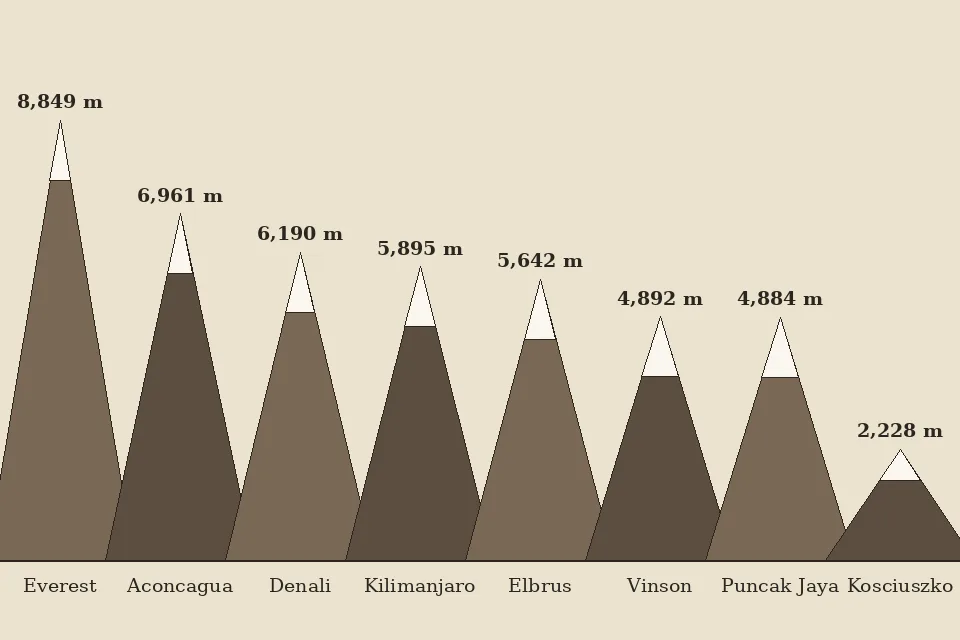
- What height for Everest did Nepal and China announce jointly in December 2020? 8,848.86 metres. (The Seven Summits)
- What is the highest mountain in Africa? Kilimanjaro. (The Seven Summits)
- What is the capital of Australia? Canberra, not Sydney. (Australian Government)
- What is the capital of Canada? Ottawa. (Government of Canada)
- What is the largest country in the world by area? Russia. (United Nations Statistics Division)
- What is the smallest independent state in the world? Vatican City. (CIA World Factbook)
- How many member states does the United Nations have? 193. (United Nations)
- Which is the largest and deepest ocean? The Pacific. (NOAA)
- What is the deepest known point in the oceans? The Challenger Deep, in the Mariana Trench. (NOAA)
- Which strait separates Europe from Africa at the entrance to the Mediterranean? The Strait of Gibraltar. (Encyclopaedia Britannica)
- Which country overtook China in 2023 as the most populous in the world? India. (UN World Population Prospects)
- What is the largest hot desert in the world? The Sahara. Antarctica is the largest desert overall. (Encyclopaedia Britannica)
- Which imaginary line divides Earth into the Northern and Southern Hemispheres? The Equator. (National Geographic Society)
Round 4: History
- Where was the armistice that ended the fighting of the First World War signed? In a railway carriage in the Forest of Compiègne, on 11 November 1918. (Armistice Day)
- In which year did soldiers on the Western Front hold the Christmas truce? 1914. (The Christmas truce)
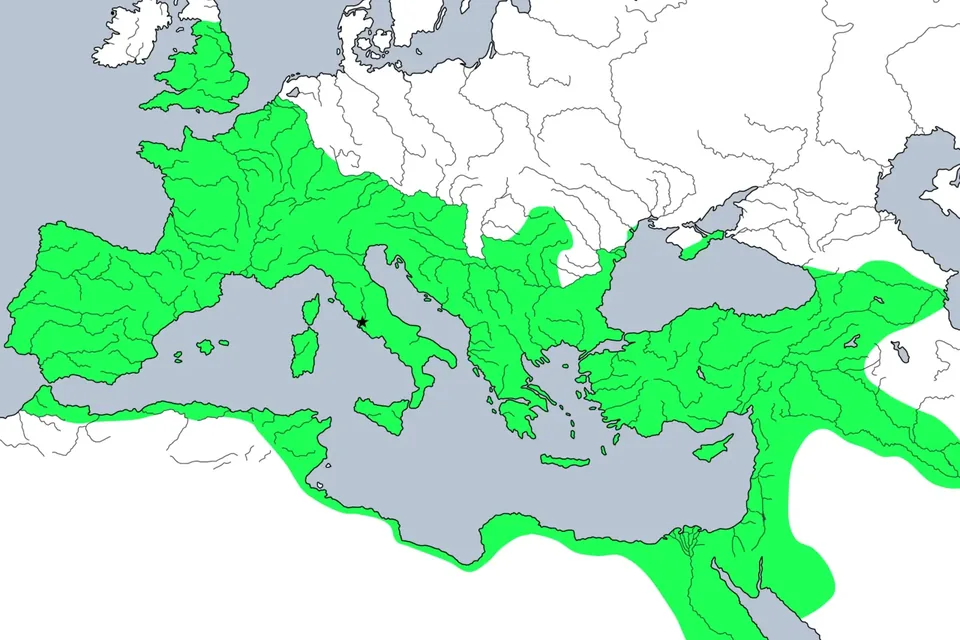
- Which emperor did Odoacer depose in 476? Romulus Augustulus. (Why the Roman Empire fell)
- Which pope crowned Charlemagne emperor on Christmas Day 800? Leo III. (Holy Roman Emperors)
- In which year was the Gunpowder Plot discovered? 1605. (The Gunpowder Plot)
- By land area at its peak, which was the largest empire in history? The British Empire; the Mongol Empire was the largest contiguous one. (The largest empires in history)
- In which year was Magna Carta sealed by King John? 1215. (British Library)
- On what date was the Bastille stormed? 14 July 1789. (French Republic, Élysée)
- Who was the first President of the United States? George Washington. (The White House)
- In which year did Christopher Columbus first reach the Americas? 1492. (Library of Congress)
- In which year did the Titanic sink? 1912. (Royal Museums Greenwich)
- In which year did the Berlin Wall fall? 1989, on the night of 9 November. (Berlin Wall Foundation)
- Who was the first woman to win a Nobel Prize? Marie Curie, in Physics in 1903. (NobelPrize.org)
- Which is the only one of the Seven Wonders of the Ancient World still largely standing? The Great Pyramid of Giza. (UNESCO World Heritage Centre)
- In which city was the Charter of the United Nations signed in June 1945? San Francisco. (United Nations)
Round 5: The human body
- How many bones does a typical adult skeleton have? 206. (Bones of the body)
- What is the smallest bone in the body? The stapes, in the middle ear. (Bones of the body)
- What is the largest internal organ? The liver. (How the liver works)
- What are the tiny filtering units of the kidney called? Nephrons, about a million in each kidney. (How the kidneys work)
- What are the tiny air sacs where the lungs exchange gases called? Alveoli. (How the lungs work)
- Which two organs make up the central nervous system? The brain and the spinal cord. (The central nervous system)
- In which part of the digestive tract are most nutrients absorbed? The small intestine. (How digestion works)
- How many chambers does the human heart have? Four: two atria and two ventricles. (National Heart, Lung, and Blood Institute)
- Which red-cell blood group is known as the universal donor? O negative. (NHS Blood and Transplant)
- How many teeth are in a full adult set, wisdom teeth included? 32. (NHS)
Round 6: Animals and plants
- What is the largest animal known to have ever lived? The blue whale. (NOAA Fisheries)
- What is the fastest land animal? The cheetah. (Smithsonian's National Zoo)
- What is the only mammal capable of true, flapping flight? The bat. (Bat Conservation International)
- How many hearts does an octopus have? Three. (Smithsonian Ocean)
- Which tree species includes the tallest known living tree? The coast redwood. (US National Park Service, Redwood National and State Parks)
- Bamboos belong to which plant family? The grasses (Poaceae). (Royal Botanic Gardens, Kew)
- Does the European hedgehog truly hibernate? Yes. (Do hedgehogs hibernate?)
- In a honeybee colony, how many queens normally lay the eggs? One. (How a honeybee colony works)
- What is the scientific name of the giant Asian hornet? Vespa mandarinia. (The giant Asian hornet)
- From which country does the hairless Xoloitzcuintle dog come? Mexico. (Hairless dog breeds)
Round 7: Customs and languages
- On which days is the Mexican Day of the Dead mainly celebrated? 1 and 2 November. (The Day of the Dead)
- Which Gaelic festival is among the roots of Halloween? Samhain. (How did Halloween start?)
- In which year did the US Congress fix Thanksgiving on the fourth Thursday of November? 1941. (Why Thanksgiving is the fourth Thursday)
- How many official languages does the United Nations have? Six: Arabic, Chinese, English, French, Russian and Spanish. (United Nations)
- Which language has the most native speakers? Mandarin Chinese. (Ethnologue)
- From which language does English borrow the word "kindergarten"? German. (Merriam-Webster)
- Which country gave the Statue of Liberty to the United States? France. (US National Park Service)
- What is the currency of Japan? The yen. (Bank of Japan)
- In Japan, what is the custom of viewing cherry blossoms in spring called? Hanami. (Japan National Tourism Organization)
- What is the name of the eight-day Jewish festival of lights? Hanukkah. (Encyclopaedia Britannica)
Round 8: Sport
- How often are the Summer Olympic Games held? Every four years. (International Olympic Committee)
- Which city hosted the 2024 Summer Olympics? Paris. (IOC)
- What are the five colours of the Olympic rings? Blue, yellow, black, green and red, on a white background. (IOC)
- How many players does each team have on the pitch in association football? Eleven, including the goalkeeper. (IFAB, Laws of the Game)
- Which tennis Grand Slam tournament is played on clay? The French Open (Roland-Garros). (Fédération Française de Tennis)
- What is the official length of a marathon? 42.195 km. (World Athletics)
- Which country has won the most men's FIFA World Cups? Brazil, five titles. (FIFA)
- In which sport is the Ryder Cup contested? Golf. (Ryder Cup Europe)
- What colour is the jersey worn by the overall leader of the Tour de France? Yellow. (Amaury Sport Organisation)
- How many points is a touchdown worth in American football? Six. (NFL Rulebook)
Round 9: Arts and books
- Who painted the Mona Lisa? Leonardo da Vinci. (Musée du Louvre)
- In which city is the Louvre? Paris. (Musée du Louvre)
- Who painted The Starry Night (1889)? Vincent van Gogh. (Museum of Modern Art, New York)
- Who sculpted the marble David in Florence? Michelangelo. (Galleria dell'Accademia)
- Who wrote Romeo and Juliet? William Shakespeare. (Folger Shakespeare Library)
- Who wrote Les Misérables? Victor Hugo. (Bibliothèque nationale de France)
- Who wrote Don Quixote? Miguel de Cervantes. (Instituto Cervantes)
- Who wrote Nineteen Eighty-Four? George Orwell. (The Orwell Foundation)
- Which composer set Schiller's "Ode to Joy" in his Ninth Symphony? Ludwig van Beethoven. (Beethoven-Haus Bonn)
- In 2016 Bob Dylan received a Nobel Prize in which category? Literature. (NobelPrize.org)
When a team disputes an answer
Most arguments at the end of a round come from three sources: an answer that changed (India's population overtaking China's in the UN's World Population Prospects, a new survey of Everest), a definition (is the Caspian a lake, is Australia a continent or part of Oceania?), and popular myths. That is why each answer above names who settles the question. If the source has changed its figure since this page was written, the source wins, and we update the question. Readers who spot an outdated answer can tell us through the contact page.
For more questions on a single theme, each fact page on Footnoted ends with its own short quiz, listed on the quizzes page.
Sources
- BIPM, "The International System of Units (SI)" (base units, defining constants).
- United Nations, "Member States".
- NobelPrize.org, "Albert Einstein: Facts" and "Nobel Prize facts".
- United Nations, Department of Economic and Social Affairs, "World Population Prospects".
- Footnoted fact pages linked in the answers, each with its own sources.
 Trivia Questions
Trivia questions, with their sources
Twenty questions with answers you can check, and the five rules behind every Footnoted quiz.
 Maps & capitals
The Seven Summits
The highest peak on each continent, how high each really is, and why there are two lists.
 Past & present
The largest empires in history
British, Mongol, Russian and the rest, by peak land area, and why the ranking is fuzzy.
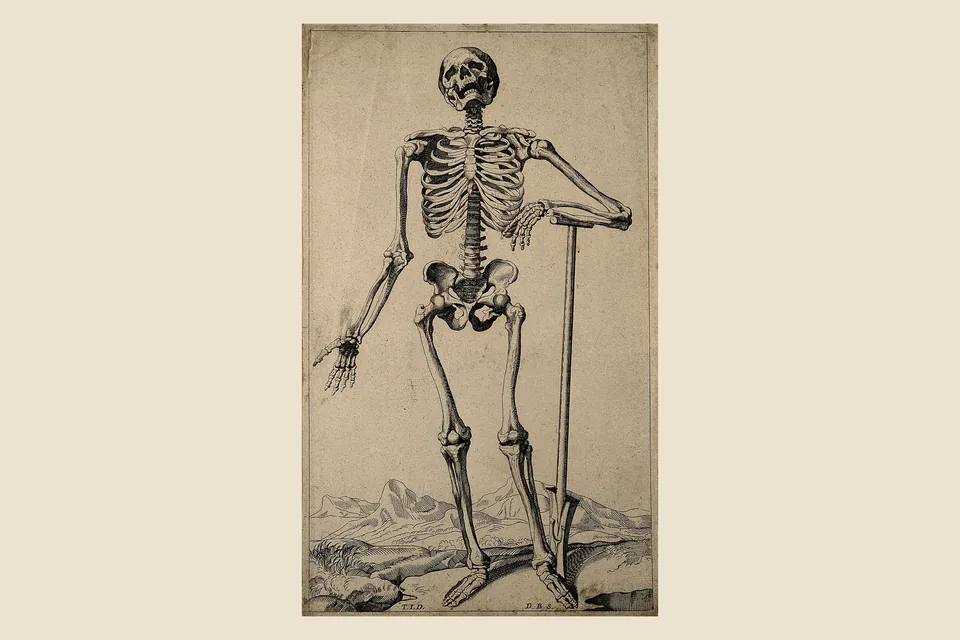 Human body
Bones of the body
Why adults have 206 bones and babies more, and how they split across the skeleton.